

Specialty trades qualify projects through a structured, multi-criteria evaluation that covers financial health, safety benchmarks, technical fit, and operational capacity before a single bid goes out. This process is called project prequalification, and it is the standard industry method for making informed bid/no-bid decisions. Contractors using structured qualification workflows report 30–45% increases in bid win rates. That number reflects a simple truth: when you stop chasing every job and start selecting the right ones, your close rate climbs. Tools like BidBook CRM and scoring rubrics formalize this process for independent trade contractors who need a repeatable system.
How specialty trades qualify projects: the core criteria
Project prequalification rests on four evaluation pillars: financial health, safety performance, technical capability, and operational capacity. Each one functions as a filter. Failing any one of them is a signal to walk away or renegotiate before committing resources.
Here is what each pillar covers in practice:
- Financial health: Assess the client's bond capacity, payment history, and backlog. A client who is overextended on other projects is a late-payment risk on yours.
- Safety performance: The industry standard is an Experience Modification Rate (EMR) below 1.0. An EMR above that threshold signals a higher-than-average accident rate, which raises your liability exposure on shared job sites.
- Technical capability: Verify that your license, crew skills, and equipment match the project's scope. State licensing verification must come from official state databases, not self-reported claims. In trades like electrical and HVAC, a client or GC claiming no license is needed is a red flag, not a shortcut.
- Operational capacity: Check crew availability against the project timeline. A job that requires 12 workers starting in six weeks is a problem if your backlog already commits 10 of them.
- References and project history: Review past project scope and outcomes to confirm the client delivers on commitments.
- Contract terms: Read indemnity clauses, liquidated damages provisions, and payment schedules before pricing. These terms define your risk exposure, not just your scope.
Pro Tip: Build a one-page prequalification checklist using these six categories. Run every new opportunity through it before you spend time estimating.
How can specialty trades assess client and project risk before bidding?

Risk assessment before bidding is where most small contractors lose money. They skip the vetting step, win the job, and spend the next six months chasing a check or managing scope creep. A structured approach prevents that.
Follow these steps to vet clients and projects before committing to a bid:
- Request at least three references. Vetting protocols recommend references from projects completed within the past 36 months. Older references do not reflect current payment behavior or project management quality.
- Review historical bid data. If you have bid for this client before, check your hit rate. A high hit rate signals a reliable buyer who values your work. A low hit rate may mean they are using your number to check a competitor's price.
- Understand bid qualifications versus exclusions. Bid qualifications are conditional terms attached to your price that can shift risk months into a project. Resolve them in a scope letter before contract execution. Leaving them unaddressed is how post-award disputes start.
- Watch for payment red flags. Net-90 payment terms, vague milestone schedules, or resistance to a deposit are signals worth taking seriously. Review your client red flags checklist before signing anything.
- Evaluate competitive density. If eight other specialty contractors are bidding the same job, your margin will compress to win. Factor market pressure into your go/no-go decision, not just your cost estimate.
Pro Tip: Ask your references one specific question: "Did the contractor pay within the agreed terms on every draw?" Vague praise tells you little. Payment behavior tells you everything.
What scoring frameworks help specialty trades evaluate project opportunities?
Scoring frameworks convert gut instinct into a repeatable decision. They force you to weigh criteria consistently across every opportunity, which prevents reactive bidding driven by slow weeks or optimistic assumptions.
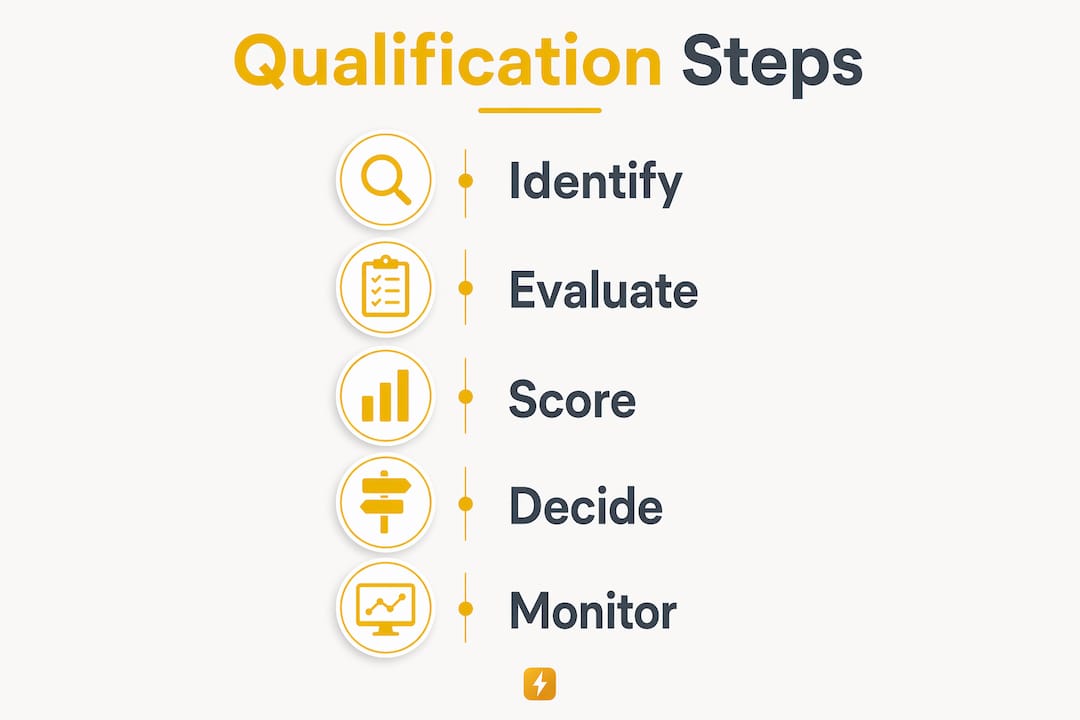
A practical scoring model uses weighted criteria assigned before you review any specific project. Common weightings look like this:
| Criterion | Weight | What it measures |
|---|---|---|
| Technical fit | 25% | License match, crew skill alignment, equipment availability |
| Price competitiveness | 30% | Margin potential, competitive density, client budget signals |
| Schedule compatibility | 20% | Timeline vs. current backlog and crew capacity |
| Client reliability | 15% | Payment history, references, past project outcomes |
| Contract risk | 10% | Indemnity terms, liquidated damages, retainage percentage |
A 30-point scoring scale gives you clear thresholds: scores of 25 or above indicate a strong project fit, while scores below 20 signal high risk. That threshold removes the ambiguity from borderline decisions. You either meet the bar or you do not.
Specialty-specific CRMs like BidBook improve this process by tracking your bid portfolio, logging outcomes, and surfacing patterns in your win/loss history. Over time, that data shows you which project types, client profiles, and contract structures produce your best margins. Shifting from reactive to strategic bid management is one of the clearest ways to grow profit without adding volume.
Pro Tip: Set your scoring weights once per quarter, not per project. Adjusting weights to justify a job you already want defeats the purpose of the framework.
When should specialty trades pass on a project or defer to a GC?
Knowing when to walk away is as valuable as knowing how to win. Some projects fall outside your optimal scope, and taking them anyway costs more than passing on them.
Pass on or refer a project when you see these conditions:
- Multi-trade complexity: Projects involving three or more trade disciplines exceed the coordination threshold where specialty trades work most efficiently. A general contractor is better positioned to manage the scheduling, liability, and communication across that many moving parts.
- License or scope mismatch: If the project requires work outside your licensed scope, even partially, the liability exposure outweighs the revenue. Refer it to a contractor whose license covers the full scope.
- Unfavorable contract conditions: Stringent indemnity clauses, unlimited liability exposure, or liquidated damages above your project margin are contract structures that turn a profitable job into a financial risk. Negotiate or decline.
- Fragmented accountability: When no single party owns coordination responsibility, disputes over delays and defects become inevitable. Specialty trades absorb disproportionate blame in those environments.
- Client history of disputes: A client with unresolved claims against previous contractors is not a client whose behavior will improve for you.
Passing on the wrong project is not losing business. It is protecting your capacity for the right one. Review your job fit criteria before committing to any project that triggers more than one of these conditions.
Key takeaways
Specialty trades that apply structured prequalification criteria consistently outperform those that bid reactively, with win rate improvements of 30–45% documented among contractors using formal qualification workflows.
| Point | Details |
|---|---|
| Four-pillar evaluation | Assess every project across financial health, safety, technical fit, and operational capacity before bidding. |
| Reference verification | Request at least three client references from projects completed within the past 36 months. |
| Scoring thresholds | Use a 30-point scale: 25+ signals a strong fit, below 20 signals high risk. |
| Know when to pass | Defer projects with three or more trade disciplines or unfavorable contract terms to a GC. |
| Resolve bid qualifications early | Address conditional bid terms in a scope letter before contract execution to prevent post-award disputes. |
Why most contractors qualify projects too late
Most contractors I talk to do their qualification work after they have already spent 10 hours estimating. By that point, they are emotionally invested. They want the job. So they rationalize the red flags: the vague payment terms, the client who dodged a reference call, the contract clause that shifts unlimited liability onto them.
The contractors who consistently win profitable work do their qualification before they open the plans. They run the client through a checklist, check the contract structure, and score the opportunity against their weighted criteria. If it does not clear the threshold, they do not estimate it. That discipline is uncomfortable at first, especially when your pipeline is thin. But it is the only way to stop trading time for bad revenue.
The other mistake I see constantly is treating bid qualifications as fine print. They are not. They are conditional promises that can redefine your scope months into a project. Resolving them upfront, in writing, in a scope letter, is not extra work. It is the work. Contractors who skip that step are the ones calling me frustrated about change orders they cannot collect on.
Digital tools like Snapqualify exist precisely because this process needs to happen fast and consistently, not just when you have time to be thorough.
— Colin
Screen clients before you estimate with Snapqualify
Snapqualify is built for trade contractors who want to qualify clients before investing hours in an estimate. The platform sends a branded intake form to your prospect, collects answers about project scope, budget, and experience, and returns a color-coded SnapScore that reflects client reliability and project suitability.

You get a clear signal on whether a client is worth your time, without a single phone call or reference chase. Snapqualify supports financial, safety, and operational assessments through AI-driven analysis and experienced-based heuristics. For contractors managing multiple bids, the platform integrates into your existing workflow without adding administrative overhead. Your client data stays protected under Snapqualify's security standards. Start screening smarter today.
FAQ
What does project prequalification mean for specialty trades?
Project prequalification is a structured evaluation process where specialty trades assess a project's financial, safety, technical, and operational fit before deciding to bid. It replaces reactive bidding with criteria-based decision making.
How many client references should a specialty contractor request?
Vetting protocols recommend at least three references from projects completed within the past 36 months. Recent references reflect current payment behavior and project management quality more accurately than older ones.
What is a good EMR score for project qualification?
An Experience Modification Rate below 1.0 is the standard threshold in contractor prequalification. Scores above 1.0 indicate a higher-than-average accident rate and increase liability risk on shared job sites.
When should a specialty trade defer a project to a general contractor?
Specialty trades should defer projects involving three or more trade disciplines to a general contractor. Multi-trade projects create coordination complexity and fragmented accountability that exceed the efficient scope of most specialty contractors.
How does a scoring framework improve bid decisions?
A weighted scoring framework assigns preset values to criteria like technical fit, price, and client reliability, then scores each opportunity against those weights. Scores above 25 on a 30-point scale indicate strong project fit; scores below 20 signal high risk.