

Not every difficult client is difficult in the same way. The types of problem clients contractors face range from the polite scope creeper who keeps adding "just one more thing" to the hostile client who withholds payment and threatens legal action. Treating them all the same is one of the most expensive mistakes you can make. Distinct client behavior types each need a different response strategy, and recognizing which type you are dealing with early can save you weeks of rework, thousands in unpaid invoices, and no small amount of stress.
Table of Contents
- Key takeaways
- 1. Scope creepers and vague project boundaries
- 2. Payment stallers and contractual pitfalls
- 3. Schedule pressure and quality dispute clients
- 4. Chronic communicators and hostile clients
- 5. A framework for comparing and managing client types
- My take on why one-size-fits-all fails contractors
- How Snapqualify helps you screen out problem clients
- FAQ
Key takeaways
| Point | Details |
|---|---|
| Client types vary widely | Scope creepers, payment stallers, hostile clients, and chronic communicators each require a different management approach. |
| Problems compound over time | Dispute drivers like scope gaps, payment delays, and communication failures stack on each other across a project lifecycle. |
| Early detection protects profit | Screening clients before signing a contract is far cheaper than managing a problem client mid-project. |
| Documentation is your defense | Contemporaneous records tied to project control milestones are your best tool in any dispute. |
| Know when to walk away | Some client relationships cost more to maintain than to exit. Recognizing the threshold protects your business. |
1. Scope creepers and vague project boundaries
Scope creepers are among the most common types of problem clients contractors face. They rarely ask for big changes all at once. Instead, they chip away at the original scope with small requests that feel reasonable in isolation. "Can you just add an outlet while you're in the wall?" turns into five additions, none of which appear on the change order log.
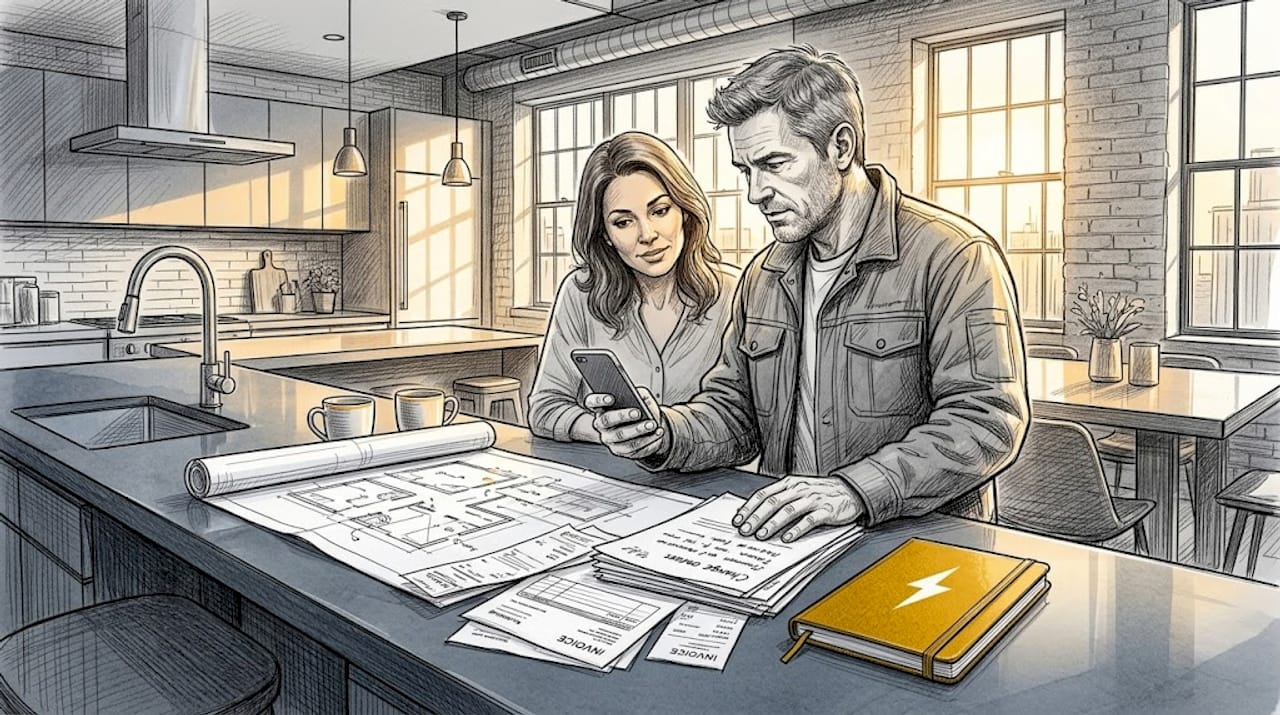
The real damage comes from margin erosion. Each added task takes time and materials without a corresponding adjustment to the contract price. Over a multi-week project, that adds up fast. Unclear scope and missing change order documentation are among the top drivers of contractor disputes, and scope creepers exploit exactly that gap.
Watch for these warning signs before the project starts:
- Clients who cannot clearly describe what they want during the estimate phase
- Requests to start work before a full scope is documented
- Pressure to skip a written change order for "minor" additions
- Vague references to what a previous contractor "just handled"
Pro Tip: Lock in a change order clause before work begins that states no additional work will be performed without a signed written change order and a revised project total. Reference this clause calmly every time a new request surfaces.
Get ahead of scope creep by reading up on preventing scope creep before it starts.
2. Payment stallers and contractual pitfalls
Payment problems are rarely surprises. They almost always have roots in weak contract terms or early warning signs that went ignored. Payment issues typically begin before a payment is ever late — in the confusion between an estimate and a contract, or in a handshake deal that left milestone amounts undefined.
Here is how payment-related problems typically unfold:
- The estimate becomes the contract. No formal agreement means no payment schedule, no stop-work clause, and no leverage when the check stops coming.
- Milestone payments are missing. Without structured draws tied to project phases, you can reach 80% completion before realizing the client has no intention of paying the final balance.
- Stop-work rights go unused. Continuing to work when payment is overdue signals that the client can delay indefinitely without consequence.
- Change orders go undocumented. Verbal approvals for added work become disputed claims when the client disputes the final invoice.
- Late payments are treated as normal. One late payment that goes unaddressed often becomes a pattern.
Retention misuse is another tactic some clients use, withholding funds well beyond the defect liability period as an informal negotiating tool. Know your contract rights here. If you need a deeper breakdown on this, the guide on avoiding non-paying clients is worth your time.
Pro Tip: Build a stop-work clause directly into every contract. When payment is 10 days overdue, you have the right to pause work and formally notify the client in writing. Using this right once makes the next payment much more reliable.
3. Schedule pressure and quality dispute clients
Some clients do not create problems through malice. They create them through timeline pressure and unclear acceptance standards. These are the clients who agreed to a six-week timeline, then told their boss the job would be done in four. Now your schedule is their problem, and they will push every lever they have to make it yours too.
Client-induced schedule shifts expose contractors to liquidated damages claims and rework cost escalation. When a client accelerates a timeline without adjusting the scope or resources, quality suffers. Then the same client disputes the quality at the end.
Watch for these patterns:
- Requests to compress timelines without reducing scope
- Clients who refuse to sign off on phase completions, keeping acceptance criteria open
- Disputes over what "finished" means, particularly in cosmetic or finish-heavy trades
- Inspection sign-offs that get delayed or avoided, extending your liability window
Document every phase sign-off in writing. A text message confirming that the client walked the site and approved the rough-in stage is better than nothing, but a formal completion notice tied to your contract terms is far better. A real-world case of withheld payments and hostile escalation illustrates how unresolved quality disputes combine with delays to turn a standard project into a years-long legal conflict.
4. Chronic communicators and hostile clients
Chronic communicators call three times a day, send emails at midnight, and expect a response within the hour. Left unmanaged, they consume a disproportionate share of your time and create a paper trail of confusion. The real risk is decision fatigue. When everything feels urgent, you stop distinguishing between a genuine issue and a nervous client who needs reassurance.
Proactive communication reduces escalation. A scheduled weekly update call, sent before the client asks for one, preempts most of the noise. Set communication boundaries in writing at the start of the project: a single point of contact, defined response windows, and a clear protocol for urgent issues versus general updates.
Hostile clients are a different category entirely:
- They use threatening language to pressure scope or price concessions
- They create unsafe or tense work environments for your crew
- They refuse to sign off on completed work as a negotiating tactic
- They go public with complaints before giving you a chance to respond
When a client becomes abusive or creates safety risks, document everything and reference your contract termination clause. Ending the relationship in writing, clearly and professionally, is the right move. No project is worth a hostile work environment.
Pro Tip: Establish a communication protocol in your contract — preferred contact method, response time expectations, and a clause stating that verbal change requests are not binding. This boundary alone filters out many chronic communicators before the project starts.
5. A framework for comparing and managing client types
Understanding the types of problem clients contractors face is more useful when you can compare them side by side and decide how to respond.
| Client type | Primary disruption | Best management approach |
|---|---|---|
| Scope creeper | Scope and margin erosion | Written change order requirement from day one |
| Payment staller | Cash flow and contract leverage | Milestone payments and stop-work clause |
| Schedule pressurer | Timeline and quality acceptance | Fixed phase sign-offs and documented timelines |
| Chronic communicator | Time drain and decision overload | Structured communication protocols |
| Hostile client | Safety, morale, and legal risk | Documentation and contract-referenced termination |
The real danger is when client types overlap. A payment staller who is also a hostile client and a scope creeper is not three separate problems. It is one client systematically dismantling every project control loop you have. Disputes compound across the project lifecycle precisely because these behaviors reinforce each other.
The decision to continue, renegotiate, or exit a client relationship should be based on a clear set of criteria: repeated contract violations, safety concerns, refusal to pay for completed work, or behavior that undermines your ability to deliver. Reviewing the contractor client red flags checklist before you sign a contract is one of the most efficient things you can do.
My take on why one-size-fits-all fails contractors
I've seen contractors lose profitable years not because they were bad at their trade, but because they handled every difficult client the same way. They stayed patient, stayed professional, and kept showing up, whether they were dealing with a confused homeowner who needed better scope documentation or an outright bad actor withholding payment on purpose.
The mistake is conflating personality with behavior type. A nervous client who calls too much is not the same problem as a client refusing to sign change orders. One needs reassurance and a communication structure. The other needs a contract enforcement conversation. What I've learned from watching these situations play out is that contractors who categorize first and respond second almost always come out better. They waste less goodwill, protect their margins, and know exactly when the relationship has crossed into territory worth exiting.
Documentation is not just your legal protection. It is your diagnostic tool. When you look back at a dispute, the pattern is always visible in the records. The friction that compounded into a $20,000 dispute started as an unsigned change order on week two.
— Colin
How Snapqualify helps you screen out problem clients
The best way to deal with difficult clients for contractors is to identify them before you're two weeks into a job. Snapqualify is built specifically for this. The platform sends potential clients an intelligent intake form that asks targeted questions about project scope, budget, timeline expectations, and prior contractor experience. The responses feed into an AI-powered risk analysis that generates a color-coded SnapScore, giving you a fast, clear read on client reliability before you invest time in an estimate or site visit.
Snapqualify helps you catch the signals that typically get missed in a first phone call. A client with a vague budget, a history of disputes with other contractors, and unrealistic timeline expectations will show up in the score before they show up on your job site. Visit snapqualify.com to see how client screening fits into your existing workflow. You can also review how Snapqualify handles your data on the security page.
FAQ
What are the most common types of problem clients contractors face?
The most common types are scope creepers, payment stallers, schedule pressurers, chronic communicators, and hostile clients. Each disrupts a different part of project control and requires a different response strategy.
How do I handle a client who keeps expanding the project scope?
Require a signed change order for every scope addition before work begins, and reference this clause calmly every time a new request comes in. Proactive documentation is the most effective defense against scope creep.
When should a contractor end a client relationship?
When a client becomes abusive, refuses to honor payment terms, demands repeated unpaid work, or creates safety risks, it is time to terminate in writing with a clear contract reference.
Why do payment problems usually start before payment is late?
Payment problems begin early in contract administration failures — like treating an estimate as a contract, skipping milestone payments, or failing to enforce stop-work rights when payment slips.
Can screening clients upfront actually reduce disputes?
Yes. Asking targeted questions about budget, scope clarity, and prior contractor experience before signing a contract reveals patterns that predict problem behavior, giving you the information to decide whether to proceed.