

Vetting a homeowner before quoting is the practice of qualifying a client's reliability, project clarity, and payment behavior before you invest time in an estimate. Most contractor disputes trace back to misaligned expectations during bidding, not poor workmanship. That means your intake process is your first line of defense. This guide covers the key indicators, red flags, and communication tactics that help you prequalify homeowners before a single number leaves your mouth.
What does vetting homeowner before quoting actually involve?
Vetting a homeowner before quoting means running a structured homeowner qualification process before you commit time to a site visit or detailed estimate. The industry term for this is client prequalification. It covers three areas: project scope clarity, decision-maker authority, and payment behavior. Contractors who skip this step routinely absorb the cost of wasted estimates, scope creep, and late payments.
The goal is not to interrogate every lead. The goal is to filter out high-friction clients early, so you spend your estimating hours on projects that are likely to close and run smoothly. Think of it the way an underwriter thinks about risk. Applying underwriting-style rigor to client qualification significantly reduces time wasted on difficult leads.
What are the key indicators of a reliable homeowner?
Reliable homeowners share a consistent set of behaviors before the quote even starts. Spotting them early separates profitable projects from problem ones.
The strongest signals include:
- Documented project scope. The homeowner can describe what they want in writing, with specific materials, dimensions, or outcomes. Vague requests like "just fix it up" are a warning sign.
- Decision-maker present. The person you are speaking with has the authority to approve the contract and write the check. If they keep saying "I need to check with my spouse," confirm both parties will be at the estimate meeting.
- Standard payment terms accepted. The homeowner agrees to a deposit, milestone payments, and a final payment on completion without pushing back on the structure. Clients who follow payment schedules are 30–40% less likely to cause mid-project friction. That number reflects a real difference in project outcomes.
- Clear timeline expectations. They understand that quality work takes time and are not demanding an unrealistic start date to pressure you.
- Responsive communication. They reply to messages within a reasonable window and answer your questions directly.
Pro Tip: Watch how a homeowner fills out your intake form. Incomplete answers, vague budget ranges, or skipped questions about project scope are early signals of a difficult client ahead.
Use a contractor client red flags checklist during your first contact to make this process consistent across every lead.

How can contractors detect price shoppers vs. serious clients?
Price shoppers are homeowners whose primary goal is the lowest number, not the best outcome. They cost you estimating time and rarely convert to profitable projects.
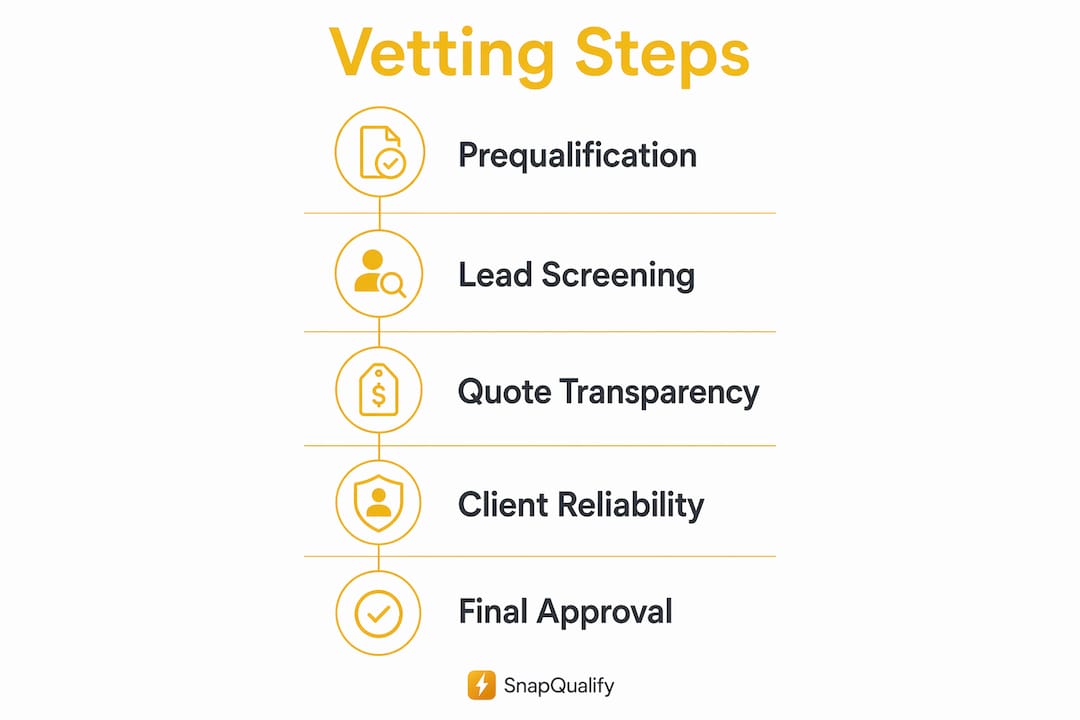
The clearest signal is bid volume. Homeowners soliciting more than five bids signal price-driven selection, which leads to diminishing returns for contractors. When a homeowner tells you they have already called six contractors, that is not a compliment. It means they are running a price auction, not selecting a professional.
Watch for these behaviors during the quote request phase:
- Asking for a ballpark number before the site visit. Serious clients want an accurate quote. Price shoppers want a number to use as leverage against other bids.
- Refusing to share their budget. A homeowner who will not give you a budget range is often testing whether your number comes in under what they have already heard.
- Focusing only on total price, not scope. Questions like "what's your best price?" with no follow-up about materials or timeline reveal price-first thinking.
- Urgency without commitment. They need it done "as soon as possible" but cannot confirm a start date or sign a contract.
Pro Tip: Ask directly: "Have you received other quotes for this project?" The answer tells you where you stand. If they have three or more quotes already, ask what they are looking for beyond price before you spend time on an estimate.
Understanding why bids get rejected helps you recognize when a homeowner was never serious about your proposal to begin with.
What role do detailed quotes and contract transparency play in vetting?
A detailed quote is not just a pricing document. It is a test of whether a homeowner is ready to work with you professionally.
A complete contractor quote includes scope of work, line-item materials with quantities, labor costs, allowances for unknowns, a project schedule, payment terms, and lien waiver provisions. When you present this level of detail, a homeowner's reaction tells you everything. Homeowner insistence on lump-sum quotes or reluctance to itemize costs is a red flag for a high-friction client. Homeowners who prefer vague quotes often become the clients who dispute every change order.
| Quote type | Homeowner response | Risk level |
|---|---|---|
| Detailed line-item quote | Reviews each section, asks clarifying questions | Low risk |
| Detailed line-item quote | Skips to total, ignores scope | Medium risk |
| Lump-sum quote requested | Demands ballpark, resists itemization | High risk |
| Vague scope accepted | No questions asked, no pushback | High risk |
The homeowner who reads your quote carefully and asks good questions is the client you want. The one who only looks at the bottom line and asks you to "sharpen your pencil" is showing you exactly how the project will go.
What communication strategies improve vetting effectiveness?
The most effective shift you can make in your intake process is moving from selling to diagnosing. Shifting from selling to diagnosing forces the homeowner to define their needs precisely, which uncovers risk and clarifies scope before you commit to an estimate.
Use targeted questions during your first contact to reveal how prepared the homeowner actually is:
- "What is driving the timeline for this project?"
- "Have you done any work with contractors before on a project this size?"
- "Do you have a budget range in mind, or are you still gathering information?"
- "Who else will be involved in the final decision?"
- "What does a successful outcome look like to you?"
These questions do two things. They give you real information about the project. They also reveal how the homeowner communicates under low-pressure conditions. A homeowner who cannot answer basic questions about their own project is not ready to be a client. Early observation of payment behavior and communication through intake interviews is one of the most reliable methods contractors use to identify risk before quoting.
AI-assisted intake tools can generate targeted screening questions based on project type and flag inconsistent answers automatically, reducing the manual effort of this process.
Key Takeaways
A structured homeowner qualification process is the single most effective way to reduce wasted estimates, scope creep, and payment disputes before they start.
| Point | Details |
|---|---|
| Prequalify before estimating | Run a structured intake process before committing time to a site visit or detailed quote. |
| Watch payment behavior early | Clients who resist deposits or delay payment terms signal higher dispute risk later. |
| Use detailed quotes as a filter | Homeowners who reject itemized quotes are more likely to dispute change orders mid-project. |
| Diagnose before you sell | Ask targeted questions in the first call to reveal scope clarity and decision-maker authority. |
| Limit bids to serious leads | Homeowners collecting more than five bids are usually price shopping, not selecting a professional. |
What I have learned from vetting homeowners the hard way
The contractors who struggle most with bad clients are usually the ones who skip the intake process because they are afraid of losing the lead. I get it. When the phone rings, the instinct is to say yes and figure out the rest later. That instinct is expensive.
The red flags are almost always visible before the estimate. A homeowner who cannot describe their project clearly, pushes back on a deposit, or refuses to name a budget is telling you exactly what the project will feel like. Less than 13% of customer reviews include meaningful operational feedback, so you cannot rely on star ratings to vet clients. You have to build your own process.
The best contractors I know treat the first phone call like a job interview where they are the employer. They ask direct questions, listen carefully, and walk away from leads that do not meet their criteria. That discipline is what separates contractors who are always chasing a check from those who run clean, profitable projects. A solid lead qualification checklist makes that discipline repeatable, not just instinctive.
— Colin
How Snapqualify helps contractors qualify leads faster
Spending hours on estimates for clients who were never serious is one of the most common profit leaks in contracting. Snapqualify is built to close that gap.
Snapqualify gives contractors a branded intake form that homeowners complete before the first conversation. The platform analyzes responses using AI and experience-based heuristics, then generates a color-coded SnapScore showing client reliability and project fit. Roofers, electricians, plumbers, HVAC technicians, painters, and general contractors use it to filter high-friction leads before investing estimating time. Snapqualify also takes data security seriously, so homeowner information is handled with the same care you bring to every job. If you want to stop wasting quotes on the wrong clients, Snapqualify is the place to start.
FAQ
What is the homeowner qualification process for contractors?
The homeowner qualification process is a structured intake method contractors use to assess a client's project clarity, payment behavior, and decision-making authority before providing a quote. It typically involves targeted questions, intake forms, and review of early communication signals.
How do I spot a price shopper before quoting?
Homeowners soliciting more than five bids, refusing to share a budget, or asking for ballpark numbers before a site visit are the clearest signs of price-driven selection rather than value-based hiring.
Why do detailed quotes help with assessing homeowner reliability?
A detailed line-item quote tests whether a homeowner is prepared to engage professionally. Homeowners who resist itemized breakdowns or demand lump-sum pricing are significantly more likely to dispute change orders and payment terms later.
What questions should I ask during homeowner screening before estimates?
Ask about timeline drivers, prior contractor experience, budget range, decision-maker involvement, and what a successful project outcome looks like. These questions reveal both project readiness and communication style.
Can AI tools help with the vetting process for clients?
Yes. AI-assisted intake platforms like Snapqualify analyze homeowner responses to generate risk scores, flag inconsistent answers, and help contractors prioritize leads without manual review of every submission.