

Construction bid rejection is defined as the formal disqualification of a submitted proposal due to failure to meet mandatory administrative, technical, or procedural requirements. Responsiveness failures cause 15–25% of bid rejections before pricing is ever reviewed. That means your number, your labor breakdown, and your timeline never get seen. The problem is almost always preventable, and understanding bid rejection reasons is the first step to fixing your win rate.
Why construction bids get rejected before evaluation
Most contractors assume they lose bids on price. The reality is that a significant share of bids are eliminated before a single evaluator reads the cost section. Bid responsiveness is a pass/fail gate applied before any qualitative or financial review begins. A non-responsive bid must be rejected regardless of how qualified or competitive the contractor is.
Responsiveness covers the administrative basics: signed forms, acknowledged addenda, correct bid bonds, and complete documentation. Miss any one of these, and your bid is out. The evaluator has no discretion. This is why administrative discipline matters more than most contractors realize.
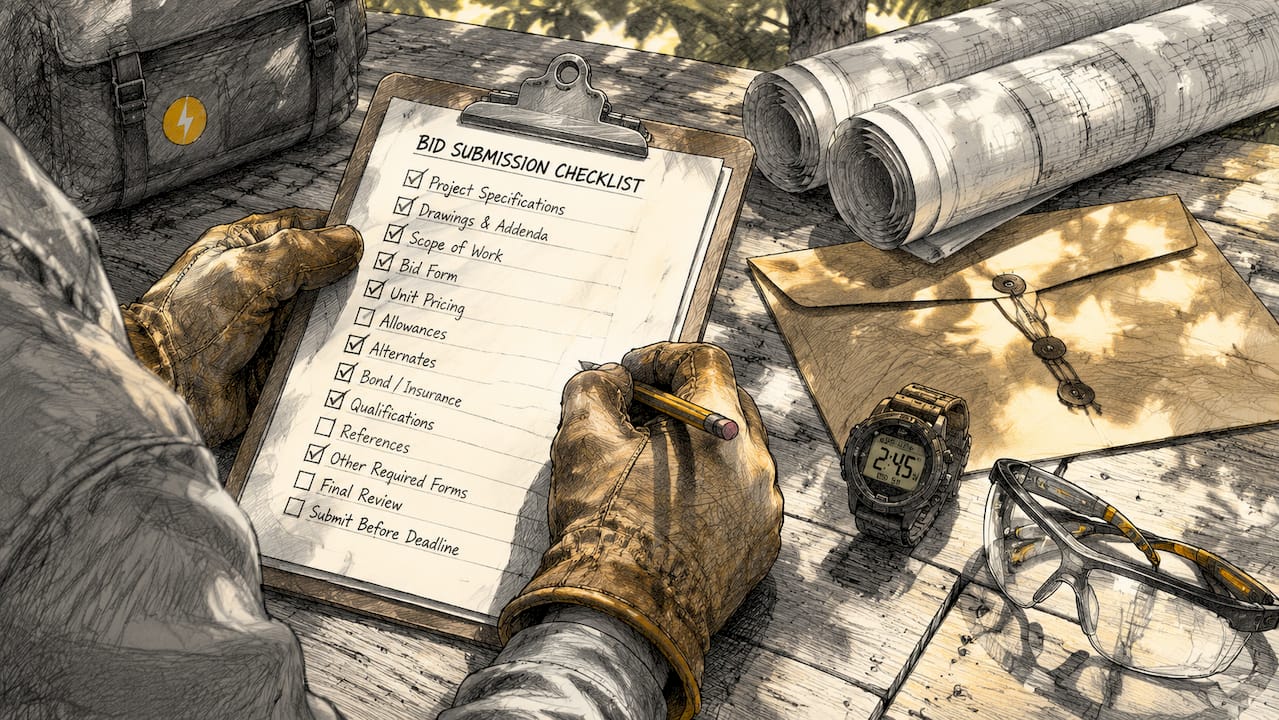
Which documentation errors cause construction bid rejection?
Documentation failures are the most common reason bids fail at the first screening stage. Compliance failures cause disqualification before content is ever evaluated, which means a technically superior proposal gets thrown out over a missing affidavit.
The most frequent documentation errors include:
- Missing bid bonds or incorrect bond amounts. Federal procurements require bonds from approved sureties on the Treasury's list. A bond at the wrong percentage voids the bid entirely.
- Unsigned forms or missing authorization letters. A missing signature on a single form triggers automatic rejection.
- Blank fields on bid schedules. Leaving blank fields triggers automatic rejection. Use explicit entries like "$0" or "included" to show you considered every line item.
- Expired or mismatched SAM.gov registrations. For federal work, an expired SAM.gov registration causes immediate disqualification at submission, not after review.
- Incorrect file formats or missing attachments in electronic submissions. Many portals reject uploads that do not match specified formats, and there is no opportunity to resubmit after the deadline.
Pro Tip: Build a submission checklist specific to each bid. Walk through every required document the day before the deadline, not the morning of. Assign one person to verify signatures, bond amounts, and registration status before the package leaves your office.
How do generic proposals lead to technical bid failure?
Technical non-compliance is the second major filter that eliminates bids. Approximately 30% of government tenders receive technical rejections before financial proposals are opened. That is a significant portion of capable contractors losing work not because they cannot do the job, but because their proposal does not prove it.
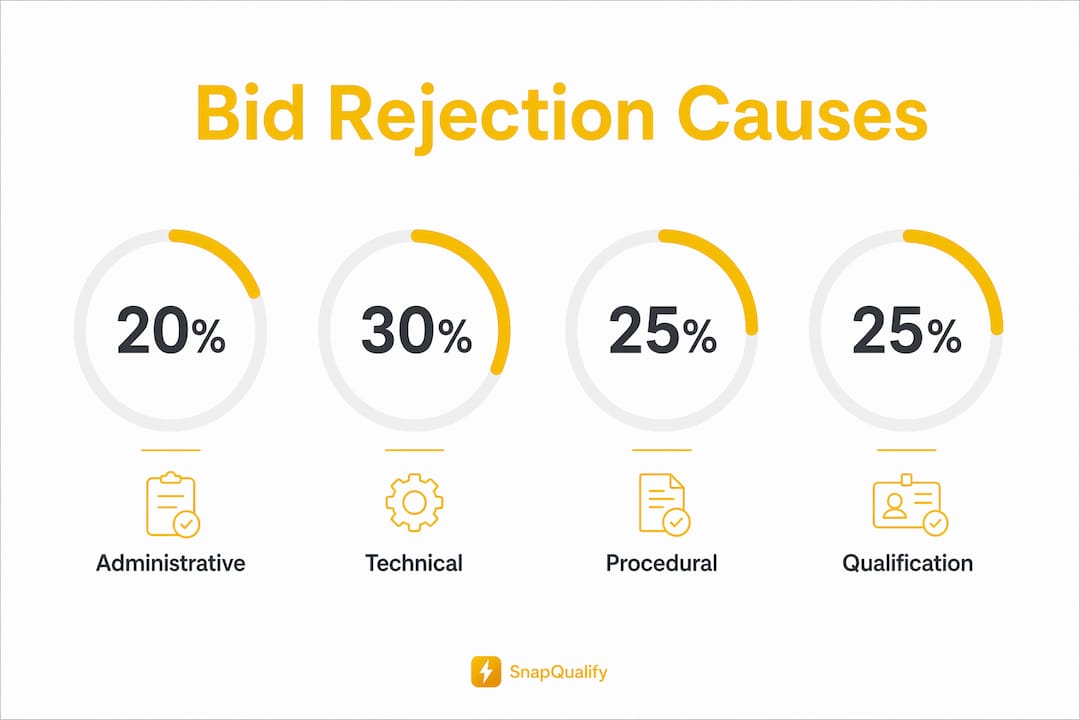
The core problem is generic methodology. Copy-pasted methodology lowers evaluator scores because evaluators are trained to score against specific criteria, not general claims of competence. Writing "we have extensive experience in commercial construction" tells an evaluator nothing. Describing your phased approach to a specific site condition on this project tells them everything.
Federal bids add another layer of complexity. Failure to address Section M evaluation criteria leads to low technical scores even when the contractor is fully capable of performing the work. Section M defines exactly how proposals will be scored. If your submission does not mirror that structure, you are leaving points on the table.
The fix is straightforward but requires discipline:
- Read the solicitation from back to front. Start with the evaluation criteria, then write your proposal to address each factor directly.
- Avoid boilerplate. Every project description, methodology, and past performance example should reference this specific project.
- Address the buyer's stated concerns. If the solicitation mentions site access constraints or phased occupancy, your proposal must respond to those conditions explicitly.
Pro Tip: Print out the evaluation criteria and keep them next to you while writing. Every paragraph you write should answer a specific scored question. If it does not, cut it.
What procedural mistakes cause bids to be rejected outright?
Procedural errors are the most unforgiving category of construction proposal issues. There is no grace period, no appeal, and no second chance. Even seconds late causes rejection in federal procurement, where submission timestamps are standardized and enforced without exception.
The table below shows the most common procedural mistakes and their direct consequences:
| Procedural Mistake | Consequence |
|---|---|
| Late submission by any margin | Automatic disqualification, no exceptions |
| Unacknowledged addenda | Bid deemed non-responsive and rejected |
| Incorrect bid bond percentage | Bid voided before financial review |
| Bond from non-approved surety | Immediate disqualification in federal bids |
| Wrong electronic file format | Portal rejection, no resubmission allowed |
Addenda are a particularly common trap. When an owner issues a change to the bid documents, every bidder must formally acknowledge receipt. Skipping that acknowledgment, even if you read the addendum and incorporated the changes, makes your bid non-responsive. The evaluator cannot assume you are aware of the updated scope.
For courier or hand-delivered submissions, confirm the receiving office's exact address, hours, and any security check-in requirements. Arriving at the wrong building entrance five minutes before deadline has cost contractors real bids. For electronic submissions, upload at least 24 hours early to account for portal errors or slow connections.
Pro Tip: Set a hard internal deadline 48 hours before the actual due date. Use the remaining time to verify addenda acknowledgments, confirm bond details with your surety, and do a final document review. Rushing the last hour is where most procedural errors happen.
How does failing qualification criteria affect bid acceptance?
Responsiveness and responsibility are two separate evaluations, and confusing them is a common bidding mistake that costs contractors work. Responsiveness is the binary pass/fail check described above. Responsibility evaluates whether the contractor is actually capable of performing the contract.
A bid can be responsive and still be rejected if the contractor is deemed non-responsible. Responsibility criteria typically include:
- Financial capacity. Owners want proof you can fund the project through completion. Bank statements, bonding capacity letters, and lines of credit all serve as evidence.
- Past performance. Relevant project history with verifiable references. Gaps or negative references raise flags.
- Licenses and certifications. Expired licenses or missing specialty certifications disqualify bids on regulated work.
- Safety record. A high Experience Modification Rate (EMR) signals elevated risk and can eliminate your bid on public projects.
Not answering specific questions in bid documents causes failure because evaluators score strictly to requirements. If the solicitation asks for three comparable projects completed in the last five years, submitting two projects from seven years ago does not satisfy the requirement. Match the criteria exactly.
Pre-qualification is the proactive solution. Many public owners run pre-qualification programs that let you establish your responsibility credentials before a specific bid opens. Getting pre-qualified shortens your submission checklist and signals credibility before the competition starts.
Key takeaways
Construction bids get rejected most often due to preventable administrative failures, not pricing, making compliance discipline the single highest-return investment a contractor can make in their bidding process.
| Point | Details |
|---|---|
| Responsiveness is a hard gate | Missing a signature or addendum acknowledgment eliminates your bid before pricing is reviewed. |
| Documentation errors are the top cause | Expired SAM.gov registrations, blank schedule fields, and missing bonds cause instant disqualification. |
| Generic proposals fail technical scoring | Evaluators score against specific criteria; copy-pasted methodology earns low marks regardless of capability. |
| Timing is absolute | Even a seconds-late submission causes rejection in federal procurement with no exceptions. |
| Responsibility follows responsiveness | Financial capacity, past performance, and valid licenses must be documented to pass the second evaluation stage. |
The detail that separates winners from losers
I have reviewed a lot of bid outcomes over the years, and the pattern is consistent. Contractors who lose repeatedly are not losing on price as often as they think. They are losing on paperwork. A missing initial here, an unacknowledged addendum there, a bond pulled from a surety that fell off the Treasury list six months ago. These are not complex problems. They are discipline problems.
The contractors who turn their win rates around do one thing differently: they treat bid preparation like a production schedule. They assign tasks, set internal deadlines, and verify completion before submission. They also ask clarifying questions. Failing to ask clarification questions about ambiguous bid documents leads to costly assumptions that sink proposals. Most contracting officers welcome pre-bid questions. Use that window.
I also see contractors skip the construction contract scope review because they are in a hurry to get to pricing. That shortcut is expensive. The scope section tells you exactly what the evaluator cares about. Read it before you write a single word of your proposal.
The uncomfortable truth is that improving your bid success rate does not require better pricing strategy. It requires better process.
— Colin
How Snapqualify helps you win more bids
Snapqualify is built for trade contractors who want to stop losing work to preventable mistakes. The platform helps you screen projects and clients before you invest hours building a proposal, so you focus your effort on bids you are actually positioned to win.
Snapqualify's intake forms and AI-powered risk analysis flag scope mismatches, client reliability issues, and qualification gaps early in the process. That means fewer wasted submissions and more time spent on proposals where your credentials align with the project requirements. Your data stays protected throughout, with security features built to handle sensitive project and client information. If you are ready to qualify better leads and submit stronger bids, Snapqualify is the place to start.
FAQ
What is the most common reason construction bids get rejected?
Responsiveness failures, including missing signatures, unacknowledged addenda, and incomplete documents, cause 15–25% of bid rejections before pricing is reviewed.
Does a late bid submission ever get accepted?
No. Even a seconds-late submission results in automatic disqualification in federal procurement, with no exceptions or appeals process available.
What is the difference between bid responsiveness and bidder responsibility?
Responsiveness is a pass/fail administrative check on documentation completeness. Responsibility evaluates financial capacity, past performance, and licensing, and is only reviewed after a bid passes the responsiveness gate.
Why do technically strong bids still get low scores?
Failure to address specific evaluation criteria like Section M leads to low technical scores. Evaluators score against stated requirements, not general claims of competence.
How can i avoid bid rejection from documentation errors?
Build a project-specific submission checklist, verify SAM.gov registration status before every federal bid, and confirm bond details with your surety at least 48 hours before the deadline.