

Construction contract red flags are specific clauses or terms that signal unfair risk, unclear obligations, or financial exposure before a single nail is driven. Recognizing these warning signs early is the difference between a profitable project and a costly dispute. This guide covers the most critical examples of construction contract red flags, with concrete language to watch for and practical steps to protect yourself before you sign.
1. What are examples of construction contract red flags in scope of work clauses?
Vague scope of work language is the most common construction contract warning sign. Phrases like "all work necessary" or "work as required by the owner" give the other party unlimited room to expand your obligations without paying more. You end up doing extra work, absorbing extra costs, and arguing about what was ever agreed.
Watch for these specific red flags in building contracts:
- No itemized list of deliverables or materials
- Broad catch-all phrases that imply unlimited obligations
- Missing exclusions that define what you are NOT responsible for
- No reference to approved drawings or specifications
Scope creep is the leading driver of contractor disputes. A contract without a detailed, itemized scope is an open invitation for the client to keep adding work.
Pro Tip: Attach a written scope exhibit to every contract. List what is included, what is excluded, and which drawings govern the work. Never rely on verbal agreements to fill the gaps.

2. Why missing timelines and no-damage-for-delay clauses are serious red flags
California Business & Professions Code §7159 mandates that licensed contractors include start and completion dates in home improvement contracts. Missing timelines reduce accountability and make it nearly impossible to enforce schedule-related claims.
No-damage-for-delay clauses are a separate but equally serious problem. These clauses waive your right to compensation for owner-caused delays, leaving you with only a time extension. That extension does not cover your overhead, equipment standby costs, or crew downtime. Delays can cost contractors $3,000 to $7,000 per month in real losses. A time extension without money does nothing to cover those losses.
Signs of bad construction contracts related to scheduling include:
- No defined start or substantial completion date
- Vague phrases like "work will proceed in a timely manner"
- No-damage-for-delay clauses buried in boilerplate
- Uncapped liquidated damages with no proportionality to actual owner losses
Liquidated damages should have a defined cap tied to the owner's actual losses. Uncapped daily fees can erase your entire project profit.
Pro Tip: Push for "time is of the essence" language, defined liquidated damages with a cap, and explicit carve-outs for owner-caused delays. If a no-damage-for-delay clause cannot be removed, negotiate a written list of exceptions.
3. Unfair payment terms: large deposits, excessive retainage, and pay-if-paid clauses
Payment-related construction agreement pitfalls are where contractors lose the most money. Three specific terms signal serious risk.
Large upfront deposits above 10% expose you if the client defaults before work begins. You have collected money but have no legal work product to show for it, which creates disputes about refunds and project status.
Excessive retainage ties up your cash for months. Retainage above 5% on projects starting after january 1, 2026, is a red flag. Subcontractors often face retainage rates up to 10%, which means a significant portion of earned money sits in someone else's account while you pay your crew and suppliers.
Pay-if-paid clauses are among the most dangerous red flags in subcontractor agreements. These clauses condition your payment on the owner paying the general contractor first. If the owner defaults, you absorb the entire loss even though you completed your work.
Pro Tip: Negotiate pay-when-paid language instead of pay-if-paid. Pay-when-paid sets a reasonable payment deadline regardless of whether the GC has been paid. Also push for retainage reduction schedules tied to project milestones.
4. How one-sided termination and indemnification clauses create massive liability
Termination-for-convenience clauses let owners end a contract at any time for any reason. The red flag is when these clauses lack fair payment provisions for materials already purchased, work already performed, and demobilization costs. You can be sent home with unpaid invoices and a yard full of materials you bought for the job.
Broad-form indemnification clauses are equally dangerous. These clauses require you to indemnify the owner even for the owner's sole negligence. That exposure can reach seven figures and often exceeds your insurance coverage limits. Many contractors sign these clauses without realizing the standard language has been modified to shift liability far beyond what is fair.
Contracts described as "standard" frequently contain modified clauses that create liabilities most contractors would never accept if they read them carefully. Always compare the contract line by line against a known template like AIA A201 or ConsensusDocs.
Pro Tip: Negotiate mutual indemnification so each party is responsible for its own negligence. Insist on a termination-for-convenience clause that covers all reasonable costs, including materials, overhead, and a percentage of anticipated profit.
5. Missing change order processes, weak warranty clauses, and no dispute resolution
These three construction contract issues are often overlooked because they feel like administrative details. They are not.
Contracts without clear change order procedures expose you to unpaid extras. Short notice periods of 3 to 7 days for submitting change order claims effectively force you to waive your right to additional time or money. In a fast-moving project, that window closes before you even realize a change has occurred.
Missing or weak warranty provisions leave you open to long-term liability with no defined limits. A fair contract specifies warranty periods for workmanship and materials and excludes damage caused by owner misuse or third-party modifications.
Contracts without dispute resolution terms push every disagreement into expensive litigation. Defined mediation or arbitration procedures reduce both time and cost when conflicts arise.
| Red flag | What to negotiate instead |
|---|---|
| No change order process | Written approval required before work begins |
| 3-day notice window for claims | 14-day minimum notice period |
| No warranty language | Defined period covering workmanship and materials |
| No dispute resolution clause | Mediation first, then binding arbitration |
Key takeaways
Construction contract red flags are specific, identifiable clauses that expose contractors to financial loss, scope disputes, and legal liability before a project even starts.
| Point | Details |
|---|---|
| Vague scope language | Demand itemized deliverables and written exclusions before signing. |
| No-damage-for-delay clauses | Negotiate exceptions or removal; time extensions alone do not cover real losses. |
| Pay-if-paid clauses | Replace with pay-when-paid terms to protect subcontractor cash flow. |
| Broad indemnification | Limit liability to your own negligence; never accept sole-negligence coverage. |
| Missing dispute resolution | Require mediation and arbitration clauses to avoid costly litigation. |
What I've learned from reading contracts the hard way
I have reviewed hundreds of construction contracts, and the pattern is always the same. The most damaging clauses are never the obvious ones. They are buried in boilerplate, labeled "standard," and presented as non-negotiable. Most contractors skip straight to the price and the payment schedule. That is exactly what the other side is counting on.
The contracts that hurt contractors most are the ones that look reasonable at first glance. A no-damage-for-delay clause reads like a scheduling note. A broad indemnification clause reads like routine insurance language. You need to read every clause with one question in mind: who bears the risk if something goes wrong?
My advice is to build a personal checklist of the red flags covered here and run every contract through it before you respond to a proposal. When you find a red flag, do not walk away automatically. Negotiate. Most owners and GCs expect pushback on specific clauses. What they do not expect is a contractor who knows exactly which clauses to target and why. That knowledge alone changes the dynamic of every contract conversation you will ever have. When the contract involves a client you have not worked with before, use tools like client screening resources to assess risk before you even get to the contract stage.
— Colin
Snapqualify helps you catch risk before the contract arrives
Spotting red flags in a contract is only half the battle. The other half is knowing whether the client on the other side of that contract is worth the risk at all.
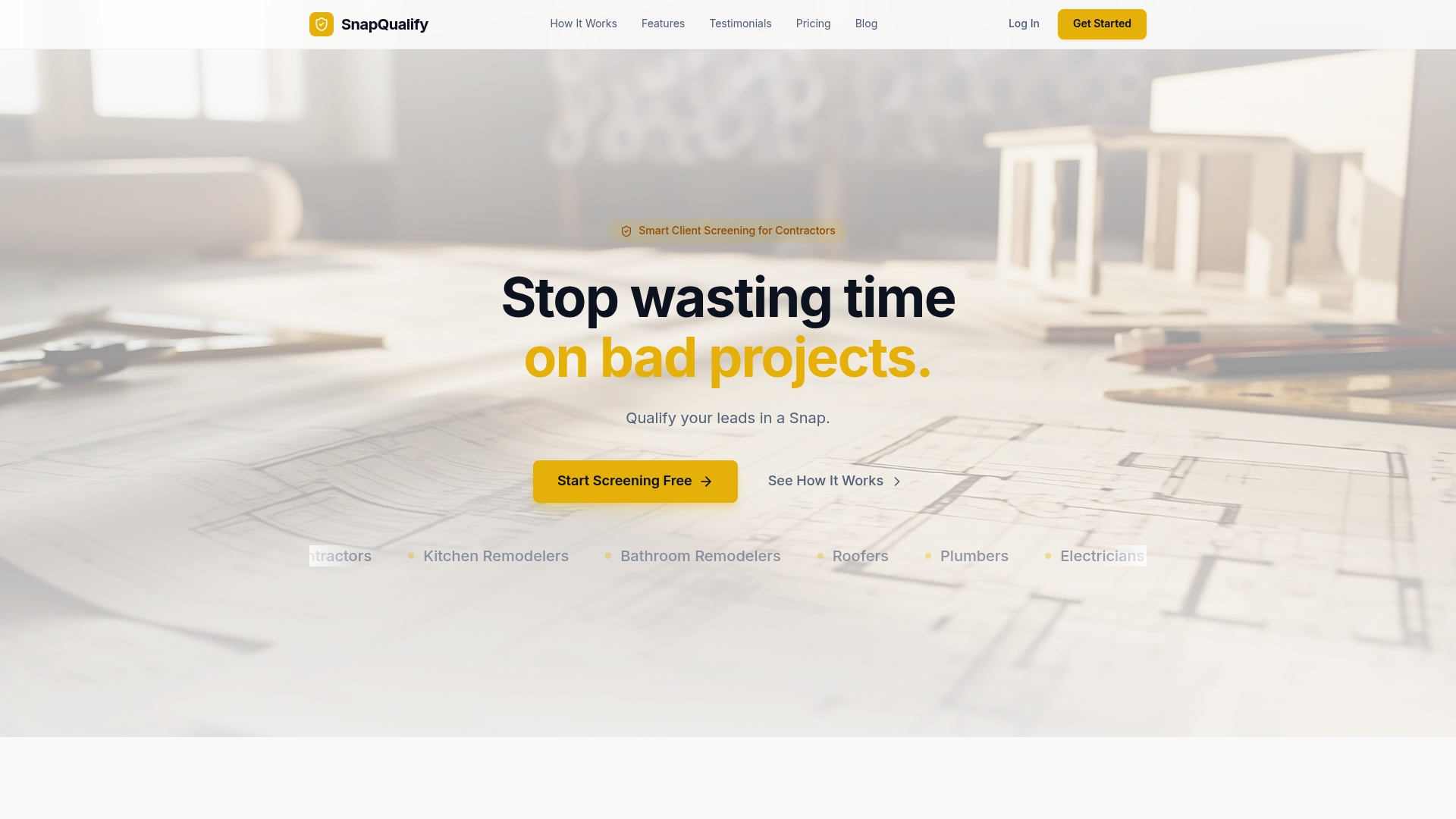
Snapqualify is built for trade contractors who want to qualify clients before investing time in proposals, site visits, and contract reviews. The platform uses AI-powered intake forms to generate a color-coded SnapScore that signals client reliability and project suitability. You get a clear read on budget alignment, project scope, and client behavior before you write a single word of a contract. Protecting your business from contract risk starts with knowing who you are dealing with. Snapqualify gives you that clarity fast, so you spend your time on projects worth signing.
FAQ
What are the most common construction contract red flags?
The most common red flags include vague scope of work language, missing completion dates, no-damage-for-delay clauses, pay-if-paid provisions, and broad indemnification requirements. Each of these shifts financial or legal risk unfairly onto the contractor.
Are pay-if-paid clauses legal?
Pay-if-paid clauses are legal in many states but are considered a top risk for subcontractors because they can result in total non-payment if the project owner defaults. Always negotiate for pay-when-paid language instead.
What is a no-damage-for-delay clause?
A no-damage-for-delay clause waives your right to financial compensation for delays caused by the owner or general contractor. You may receive a schedule extension, but no money to cover overhead, equipment costs, or lost productivity during that time.
How much retainage is too much?
Retainage above 5% is a construction contract warning sign, particularly on projects starting after january 1, 2026. Subcontractors sometimes face rates up to 10%, which ties up significant earned income for months.
Should I always hire a lawyer to review a construction contract?
Legal review is worth the cost on large or complex projects. For smaller contracts, build a personal red flag checklist based on the clauses covered here and consult a construction attorney when you find terms you cannot negotiate away on your own.