

Subcontractor risk management is the systematic process general contractors and business owners use to identify, assess, and reduce financial, operational, safety, and compliance risks introduced by subcontractors on construction projects. Without a structured approach, a single underperforming subcontractor can trigger schedule delays, cost overruns, and legal exposure that outlast the project itself. This guide covers tiered prequalification standards, ongoing oversight methods, and early warning detection so you can protect your business before problems compound.
What is subcontractor risk management and why does it matter?
Subcontractor risk management is the practice of vetting, monitoring, and controlling the risks that subcontractors bring to your project from the first bid to final closeout. The industry recognizes four core risk categories: financial, operational, safety, and legal or compliance. Each category can derail a project independently, but they often compound each other when left unchecked.
Supply chain disruptions originate from lower-tier subcontractors in roughly 30% of construction projects. That number matters because most oversight stops at the first tier. In fact, 98% of companies fail to assess risk beyond second-tier subcontractors, leaving a significant blind spot in any risk program.
The financial stakes are direct. A subcontractor who runs out of cash mid-project forces you to find a replacement, absorb delay costs, and potentially face mechanic's liens from unpaid suppliers. Understanding contractor business risk at every tier is the foundation of protecting your bottom line.

What types of risks do subcontractors introduce?
Subcontractors introduce risk across four distinct categories, and each one demands a different response.
- Financial risk: Late payments to suppliers, undercapitalization, or declining bonding capacity signal a subcontractor heading toward default.
- Operational risk: Schedule slippage, key personnel turnover, and missed submittals slow the entire project and push your completion date.
- Safety risk: A subcontractor with poor safety culture creates OSHA liability for your firm, not just theirs.
- Legal and compliance risk: Unlicensed work, expired insurance, and unresolved liens can follow your business for years after project closeout.
Lower-tier subcontractors amplify every category. When a second or third-tier sub fails, the disruption travels up the chain fast. Most general contractors never see it coming because they have no visibility past their direct contracts. Building a risk program that accounts for at least second-tier subs is not optional in 2026. It is the baseline standard for serious project management.
How does subcontractor prequalification reduce risk before work starts?
Prequalification is the single most effective tool for managing subcontractor risk. It filters out high-risk firms before they ever set foot on your site. Industry best practices set tiered requirements based on contract value:
- Under $100,000: Verify basic licensing and current insurance certificates.
- $100,000 to $500,000: Require an Experience Modification Rate (EMR) at or below 1.0 and at least 3 years of business history.
- Over $500,000: Mandate bonding equal to the full contract value and audited financial statements.
Tiering your requirements this way keeps the process proportional. You do not need audited financials from a $40,000 painting sub, but you absolutely need them from a $600,000 mechanical contractor.
Safety evaluation deserves special attention. Leading safety indicators such as formal safety management systems and active training programs predict subcontractor risk more accurately than EMR alone. EMR is a lagging metric. It tells you what went wrong in the past. A subcontractor with executive-level safety engagement and documented safety meetings is a better bet than one with a clean EMR and no formal program.
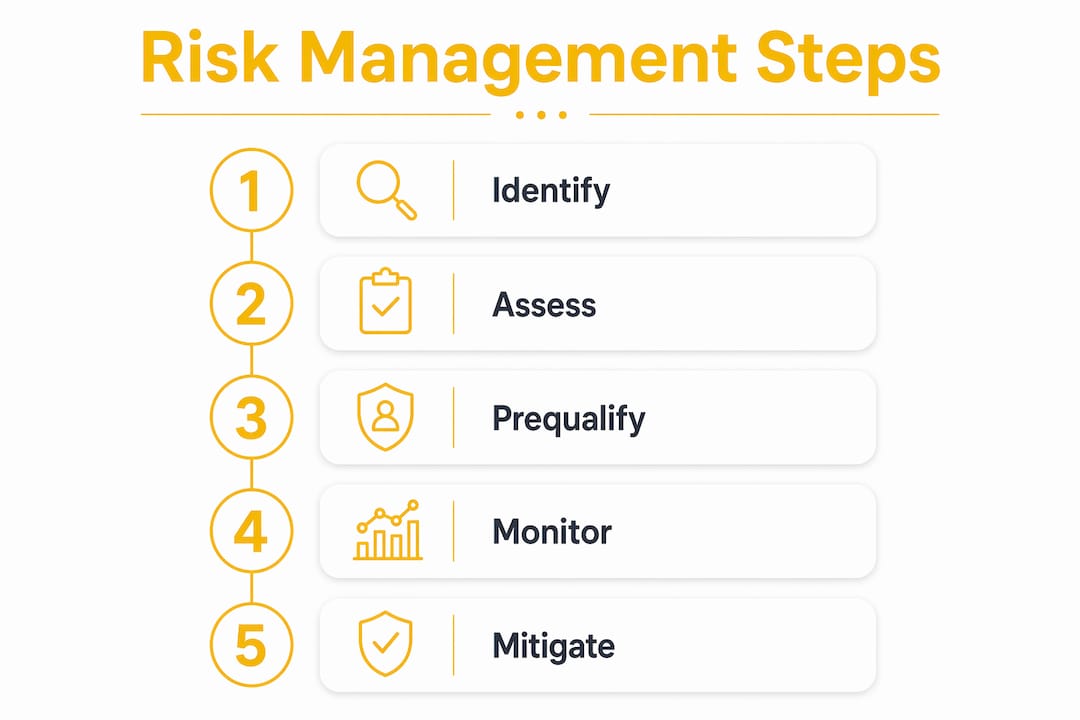
Annual requalification cycles are the standard for maintaining those standards over time. Start the process in Q1 each year and set firm deadlines. Subcontractors who miss the deadline get removed from your bid list. That policy alone filters out firms with deteriorating capacity before they bid your next project.
Bid leveling is the step most contractors skip. It means normalizing all bids to the same scope before comparing prices. A bid that is 15% lower than every competitor is not a deal. It is a signal that the subcontractor either missed scope or is buying work to cover cash flow problems.
Pro Tip: Track performance scorecards with three tiers: Preferred, Approved, and Conditional. A subcontractor who slips from Approved to Conditional triggers a review before you award them another contract, not after they cause a problem.
What ongoing strategies keep subcontractor risk under control?
Prequalification gets you to the starting line. Managing subcontractor risk through the full project lifecycle requires continuous oversight.
- Clear contracts: Every subcontract should define scope, milestone payment terms, dispute resolution procedures, and termination rights. A well-drafted subcontractor agreement removes ambiguity that leads to disputes.
- Centralized documentation: Keep all submittals, RFIs, change orders, and correspondence in one place. Disputes almost always come down to who said what and when.
- Regular site inspections: Formal inspections with written records create accountability. They also give you early warning before small problems become expensive ones.
- Cure notices: When a subcontractor underperforms, issue a formal written cure notice that specifies the deficiency, the correction timeline, and the consequences of non-compliance. This document protects you if termination becomes necessary.
- Documentation retention: Retain compliance and prequalification records for at least 5 years after project completion. That window covers most mechanic's lien statutes and multi-employer liability claims.
The "set and forget" mentality is the most common failure point in subcontractor management. Contractors who check in at the start and then assume everything is fine are the ones who get blindsided by disputes and delays. Consistent oversight is not micromanagement. It is protection.
Pro Tip: Use technology to centralize subcontractor data, track certificate expirations, and flag overdue submittals automatically. Manual tracking in spreadsheets creates gaps that cost you money.
How do you spot subcontractor warning signs early?
Early detection separates contractors who absorb problems from those who prevent them. Watch for these signals:
- Missed submittals or late RFI responses indicate organizational strain or understaffing.
- Key personnel changes mid-project, especially the project manager or superintendent, often signal internal financial or operational problems.
- Schedule slippage in the first 20% of work predicts worse slippage later. Early delays rarely self-correct.
- Declining bonding capacity over 18 months is a quiet precursor to financial distress. Bonding companies see the financials before you do.
- Bids that are 15–20% below competitors often mean the subcontractor is buying work to cover cash flow gaps, not that they found efficiencies you missed.
When you spot these contractor red flags, act immediately. Issue a cure notice, request updated financials, or downgrade the subcontractor's tier status. Waiting costs more than acting early. If the situation does not improve, termination for default with proper documentation is a legitimate and sometimes necessary step.
Key Takeaways
Effective subcontractor risk management combines tiered prequalification, continuous oversight, and early warning detection to protect your project and your business.
| Point | Details |
|---|---|
| Tier your prequalification | Match documentation requirements to contract value: licensing for small contracts, bonding and audited financials for large ones. |
| Use leading safety metrics | Formal safety programs and executive engagement predict risk better than EMR alone. |
| Requalify annually | Run a Q1 requalification cycle and remove non-compliant subs from your bid list. |
| Retain records for 5 years | Documentation protects against mechanic's liens and multi-employer liability after project closeout. |
| Act on warning signs fast | Declining bonding capacity and abnormally low bids are financial distress signals, not bargains. |
What I have learned about subcontractor risk after years in construction
The contractors who struggle most with subcontractor risk are not the ones who lack systems. They are the ones who built systems and then stopped using them consistently. Prequalification forms collect dust. Scorecards never get updated. Cure notices go unsent because nobody wants the confrontation.
The real discipline in risk management for subcontractors is follow-through. You have to treat the process as non-negotiable, not as paperwork you do when something goes wrong. The lower-tier visibility problem is real and genuinely hard to solve without technology. But the first-tier problems? Those are almost always preventable with the basics done consistently.
One thing I have seen work well is tying subcontractor tier status directly to bid eligibility. When a sub knows that slipping to Conditional status means they will not see your next RFP, behavior changes fast. That connection between performance data and real business consequences is what makes a risk program functional rather than theoretical.
— Colin
How Snapqualify supports your subcontractor risk process
Subcontractor risk management depends on clean data, fast screening, and documentation you can trust. Snapqualify is built for exactly that.
Snapqualify gives trade contractors and construction businesses a structured way to screen and qualify the people they work with before committing time and resources. The platform uses AI-driven intake forms and a color-coded SnapScore to flag risk signals early, so you are not finding out about problems after work has started. For contractors who want to know their data is protected throughout that process, Snapqualify's security infrastructure is built to keep sensitive prequalification records safe and accessible when you need them.
FAQ
What is subcontractor risk management?
Subcontractor risk management is the process of identifying, assessing, and reducing financial, operational, safety, and compliance risks introduced by subcontractors on construction projects. It covers everything from prequalification before contract award to performance monitoring through project closeout.
What is the most important step in subcontractor risk assessment?
Prequalification is the most important step. Tiered requirements based on contract value, including licensing verification, EMR thresholds, and bonding requirements, filter out high-risk subcontractors before work begins.
How often should subcontractors be requalified?
Industry best practices call for an annual requalification cycle, typically initiated in Q1. Subcontractors who miss the deadline should be removed from the active bid list until they complete the process.
What financial warning signs indicate a subcontractor is in trouble?
Declining bonding capacity over 18 months and bids that are 15–20% below competitors are the two clearest financial red flags. Both indicate cash flow problems that often lead to project default.
How long should subcontractor compliance records be kept?
Retain all compliance and prequalification documentation for at least 5 years after project completion. That retention period covers most mechanic's lien statutes and multi-employer liability claims.