

A subcontractor agreement is a legally binding contract between a general contractor and a subcontractor that defines the scope of work, payment terms, and risk allocation for a specific project. Every trade contractor working with subs needs one. Without it, you are exposed to payment disputes, scope creep, and liability claims that can derail a project and drain your cash. Over 60% of disputes between contractors and subcontractors stem from unclear scope, undocumented payment terms, and missing insurance clauses. That number drops sharply when you have a solid written contract in place.
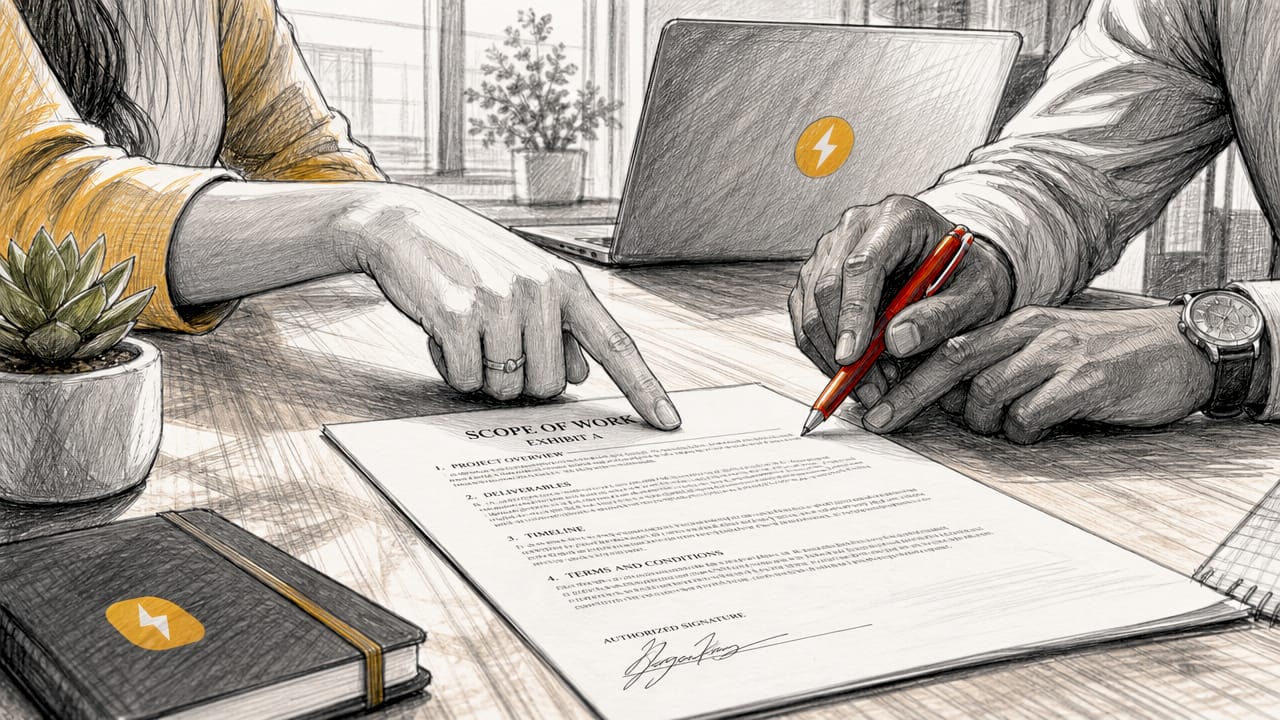
What is a subcontractor agreement and what must it include?
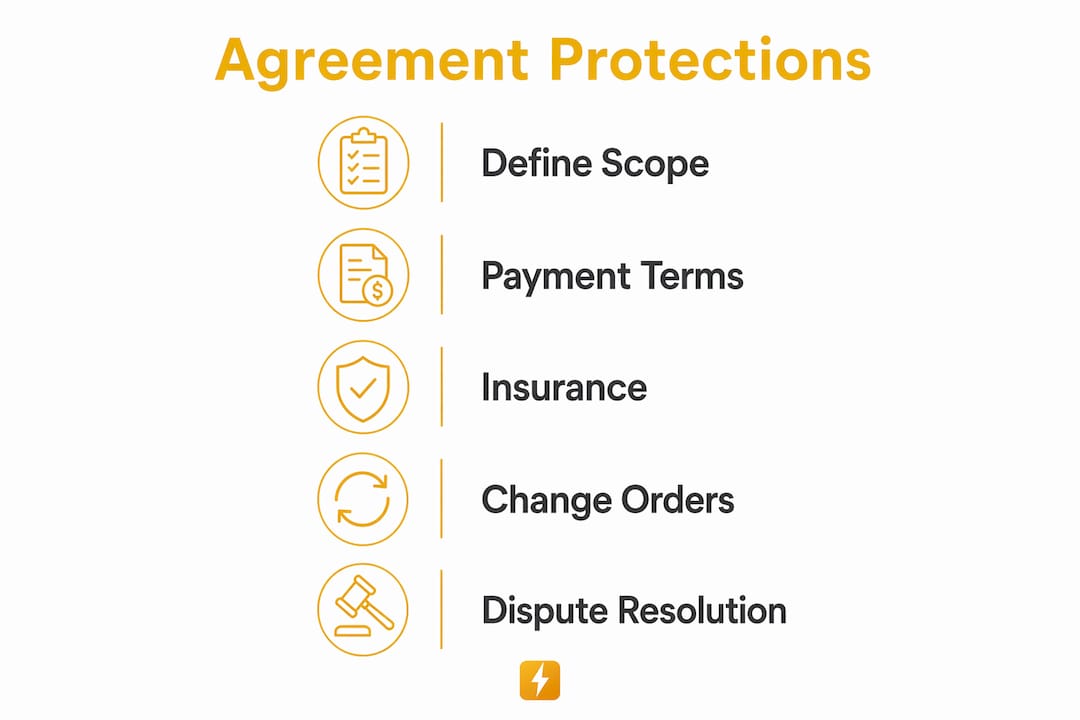
A subcontractor agreement is the operational backbone of any project where you bring in outside trade help. It does more than satisfy a legal formality. A well-drafted contract defines scope precisely, allocates risk enforceably, controls cash flow with milestones and retainage, and gives you the right to terminate or back-charge on default. Here are the core elements every subcontractor agreement must contain:
- Scope of Work (Exhibit A). This is the most critical section. The scope must reference specific drawings and specifications, list explicit inclusions and exclusions, and attach as a separate exhibit. Vague descriptions like "all electrical work" invite disputes. Precise language like "rough-in and trim-out per Sheet E-2, Rev 3" does not.
- Payment Terms. Spell out the payment schedule, retainage percentage, milestone triggers, and your change order process. Include how and when invoices are submitted and approved.
- Insurance Requirements. Require the subcontractor to carry general liability, workers' compensation, and any project-specific coverage. Specify that your company must be named as an Additional Insured. This protects you from claims arising from the sub's work. Learn more about mandatory insurance requirements and how they apply to your agreements.
- Indemnification Clause. This clause transfers legal and financial liability for the sub's negligence back to the sub. Without it, you could be defending claims that are not your fault.
- Flow-Down Provisions. These bind the subcontractor to the same obligations you carry under your prime contract with the owner. Scheduling, change orders, and dispute resolution all flow down.
- Termination Rights. Define the conditions under which either party can end the contract, the required notice period, and what happens to payment for work completed.
Pro Tip: Always attach the Scope of Work as a signed exhibit, not as body text. This makes it easier to update through change orders without rewriting the entire agreement.
How does a subcontractor agreement protect both parties?
A strong subcontractor contract protects you and the sub in different but equally important ways. Here is how the protection works in practice:
- Prevents misclassification liability. A subcontractor agreement legally classifies the sub as an independent contractor, not an employee. That distinction determines who pays payroll taxes, provides benefits, and carries workers' comp. Getting this wrong can trigger IRS audits and state labor penalties.
- Reduces scope disputes. The majority of contractor conflicts trace back to ambiguous scope language. A detailed Exhibit A eliminates the "I thought that was included" argument before it starts.
- Controls your cash flow. Payment schedules tied to milestones mean you are not paying for work that has not been completed. Retainage gives you leverage if the sub leaves defects or unfinished work behind.
- Transfers risk with indemnity and insurance. When a sub's crew causes property damage or injury on your job site, your indemnification clause and Additional Insured requirement redirect that liability where it belongs.
- Protects your prime contract. Flow-down clauses protect the general contractor's obligations to the owner by ensuring the sub is bound to the same schedule, quality, and compliance standards you agreed to.
- Avoids costly litigation. Dispute resolution clauses with operational specificity prevent expensive legal interpretation battles. Specify mediation before arbitration, name the governing state, and define the notice requirements clearly.
Understanding why payment disputes happen on construction projects can help you write tighter payment terms from the start.
What are common pitfalls when drafting subcontractor agreements?
Most contract problems are not discovered in the courtroom. They show up on the job site, three weeks in, when the sub says one thing and your contract says another. These are the mistakes that cost contractors real money:
- Vague scope language. Writing "all plumbing work" instead of referencing specific drawings and specs is the single most common drafting error. Scope should be an exhibit with precise inclusions and exclusions. Read more about scope of work best practices before you draft your next agreement.
- Generic template language. Downloading a free template and using it without modification is risky. Generic clauses often fail to resolve disputes because they lack the operational detail specific to your project type, state, or trade.
- Ignoring state law on payment clauses. Many states ban or restrict pay-if-paid clauses. Using an unenforceable payment condition does not protect you. It just creates confusion and potential liability.
- Mishandling lien waivers. Conditional lien waivers must comply with state statutory forms. Using the wrong form or applying it incorrectly can leave you exposed to lien claims even after you have paid.
- Missing back-charge provisions. If a sub leaves defective work or fails to clean up, you need a clear contractual right to correct the work and deduct the cost. Without that clause, you are in a negotiation, not a contract.
Pro Tip: Have a construction attorney review your subcontractor agreement template once a year. State laws on lien waivers, pay-if-paid, and indemnity change regularly, and an outdated clause can be worse than no clause at all.
How to manage subcontractor agreements effectively on projects
Having a signed contract is the starting point. Managing it through the life of the project is where most contractors fall short. Use this reference table to track the key management actions and their purpose:
| Management Action | Purpose | Timing |
|---|---|---|
| Verify insurance certificates | Confirm coverage and Additional Insured status before work starts | Pre-mobilization |
| Confirm license and registration | Avoid liability from unlicensed work | Pre-mobilization |
| Issue written change orders | Document scope and price changes before work proceeds | As changes arise |
| Collect conditional lien waivers | Protect against lien claims tied to each payment | With every payment |
| Inspect milestone completions | Verify work quality before releasing progress payments | Per payment schedule |
| Document warranty terms | Record sub's warranty obligations for defective work | At contract execution |
Written change orders are non-negotiable. Verbal agreements about scope changes are the fastest path to a billing dispute. Every adjustment to the original scope, schedule, or price needs a signed change order before the work begins. For guidance on resolving billing disputes when they do arise, having a documented paper trail is your strongest defense.
Key takeaways
A subcontractor agreement is the most effective tool for preventing disputes, protecting cash flow, and managing risk across every project you run.
| Point | Details |
|---|---|
| Define scope precisely | Attach Scope of Work as Exhibit A with specific drawings, inclusions, and exclusions. |
| Include all core elements | Every agreement needs payment terms, insurance requirements, indemnity, and flow-down clauses. |
| Verify state law compliance | Check your state's rules on pay-if-paid clauses and lien waiver forms before finalizing. |
| Manage the contract actively | Collect lien waivers, issue written change orders, and verify insurance before mobilization. |
| Update templates regularly | Annual legal review keeps your agreement current with changing state statutes. |
Why contractors underestimate the subcontractor agreement
Most contractors I talk to treat the subcontractor agreement as a checkbox. Sign it, file it, forget it. That mindset is expensive.
The agreement is not a formality. It is the operating manual for your working relationship with every sub on your project. When a dispute hits, and eventually one will, the contract is the only document that matters. Judges and arbitrators do not care what you meant. They read what you wrote.
The contractors who avoid costly disputes are not the ones with the most experience. They are the ones with the most specific contracts. I have seen a one-page scope exhibit save a general contractor from a six-figure claim because it listed exactly which drawings the sub was responsible for. I have also seen a generic template cost a contractor $40,000 because the indemnity clause was unenforceable in their state.
The AIA A401 form is a recognized industry standard with strong legal precedent, but it leans owner-friendly and carries licensing costs. Use it as a reference, not a default. Your agreement should reflect your project, your trade, and your state.
Treat the subcontractor agreement as an active management tool, and it will protect your business every time.
— Colin
Start every project on solid ground with Snapqualify
Before a subcontractor agreement can protect you, you need to know you are working with the right people. Snapqualify helps trade contractors screen clients and subcontractors before committing time and resources to a project.
Snapqualify's intake forms and AI-powered SnapScore flag risk signals early, so you can make confident decisions about who you work with. When you combine that screening process with a tight subcontractor agreement, you reduce scope creep, late payments, and difficult project relationships from the start. Explore how Snapqualify handles data protection and compliance to support your contract management process and keep your business protected.
FAQ
What is a subcontractor agreement in simple terms?
A subcontractor agreement is a written contract between a general contractor and a subcontractor that defines the work to be done, how and when payment is made, and who is responsible for what. It is legally binding and enforceable in court.
What should be included in a subcontractor agreement?
Every subcontractor agreement should include a detailed Scope of Work, payment schedule with retainage, insurance requirements with Additional Insured status, an indemnification clause, flow-down provisions, and termination rights.
Is a subcontractor agreement the same as an employment contract?
No. A subcontractor agreement legally classifies the worker as an independent contractor, not an employee. This distinction determines tax obligations, benefits responsibility, and workers' compensation coverage.
Can i use a free subcontractor agreement template?
You can use a template as a starting point, but generic language often fails in disputes. Tailor the scope, payment terms, and indemnity clauses to your specific project and verify that all provisions comply with your state's laws.
What happens if there is no subcontractor agreement?
Without a written agreement, disputes over scope, payment, and liability are resolved by negotiation or litigation with no clear contractual basis. This exposes both parties to significant financial and legal risk.