

A mechanic's lien is a statutory legal claim that attaches directly to real property, giving contractors a secured interest in the project they improved when payment is withheld. Understanding lien rights is one of the most practical steps you can take to protect your business from nonpayment. Unlike chasing a check through collections or small claims court, contractor lien protection converts an unsecured promise to pay into a real property encumbrance that owners, lenders, and title companies cannot ignore. Lien laws vary by state and are highly procedural, so knowing the rules before a dispute arises is the difference between getting paid and writing off the loss.
How lien rights protect contractors through property title leverage
Lien rights convert an unsecured payment promise into a secured interest on the property, creating real collection leverage that no standard contract clause can match. When you record a mechanic's lien, you "cloud" the property title. That cloud means the owner cannot sell or refinance the property until the lien is resolved. For most owners, that consequence is immediate and serious.
Here is why that leverage matters in practice:
- Title companies will not issue a clean title policy on a property with an open lien, blocking any pending sale.
- Lenders commonly refuse to release construction draws until recorded liens are cleared, putting direct financial pressure on the owner and general contractor.
- Buyers and investors walk away from encumbered properties, making the owner highly motivated to resolve your claim quickly.
- Lien threats alone often resolve payment disputes early, making lien filing a powerful pre-litigation tool before you ever step into a courtroom.
Compare this to an unsecured payment claim. Without a lien, you are an unsecured creditor. You can sue for breach of contract, but collecting a judgment takes time, money, and luck. With a lien, the property itself backs your claim.
"Lien foreclosure is the ultimate enforcement mechanism, typically pursued only when nonpayment disputes are not resolved after lien recording." — AIA Contract Documents
Foreclosure is the final step: a lawsuit to force a sale of the property to satisfy your claim. Most disputes never reach that stage because the title pressure alone is enough to prompt payment.
Why strict compliance is the price of lien protection
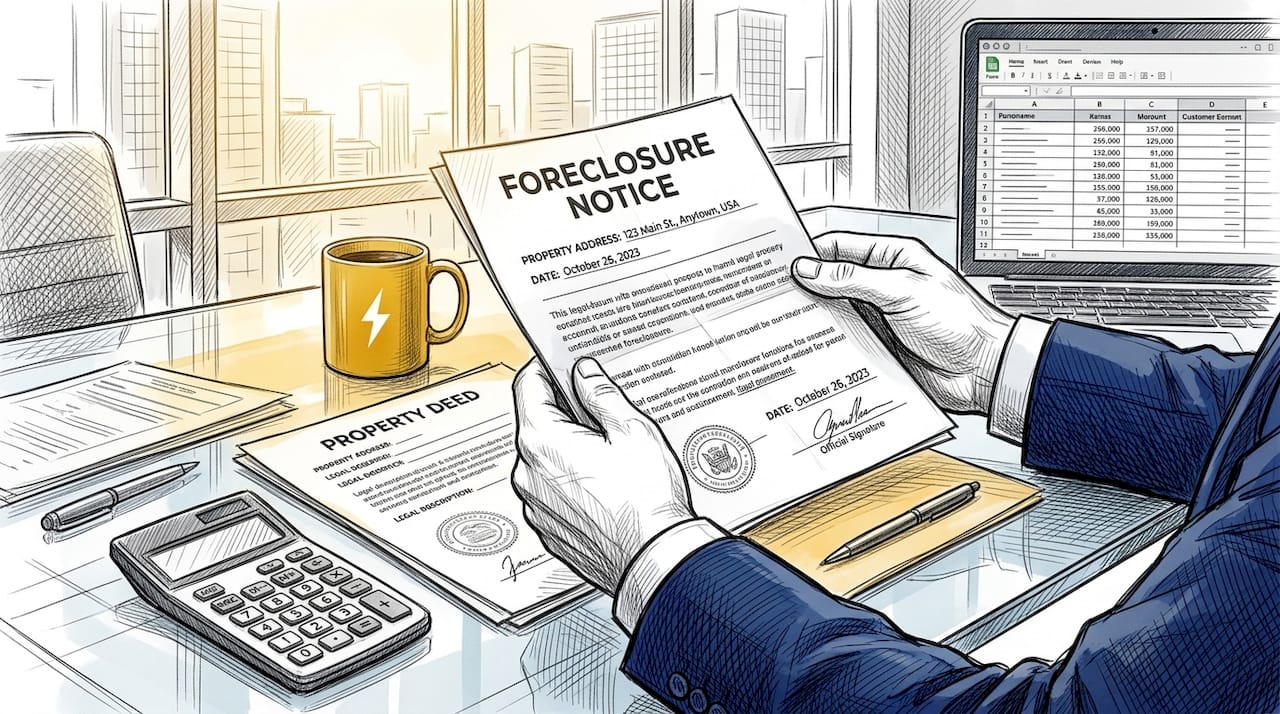
Missing notice or filing deadlines permanently eliminates lien rights, even if the work was performed and money is clearly owed. That is the hardest lesson in construction finance. The law does not care about fairness after the deadline passes.
Every state sets its own timeline, and the start points differ. California requires a 20-day preliminary notice served from the first day you furnish labor or materials. Florida requires a 45-day Notice to Owner from that same trigger point. Miss either window and your lien rights are gone for that project.
Follow these steps to stay protected on every job:
- Identify your first furnishing date the moment you mobilize or deliver materials. This is the clock start for most state notice requirements.
- Send preliminary notices immediately. Do not wait to see if payment becomes a problem. Experienced contractors send notices routinely on every project, regardless of perceived risk.
- Document delivery. Use certified mail, return receipt, or a lien notice service that provides proof of delivery. Oral notice is no notice.
- Calendar your lien recording deadline from the date of project completion or last furnishing, whichever your state uses.
- Set a second reminder at least 30 days before the recording deadline to allow time for document preparation and county recorder filing.
Pro Tip: Treat lien preservation like job costing. Track your first furnishing date on every project the same way you track labor hours. Insiders align notice and filing deadlines precisely to that date to avoid any gap in protection.
Most lien rights are lost not during the lien filing stage but during the preliminary notice stage. That is where the unforgiving procedures catch contractors off guard.
Who actually has lien rights on a construction project
Subcontractors and suppliers often have lien rights even without a direct contract with the property owner. This surprises many owners and general contractors, but it is a foundational feature of lien law. The statute protects anyone who contributes labor or materials to the improvement of real property, regardless of where they sit in the payment chain.
The tiers typically covered include:
- General contractors with a direct contract with the owner
- First-tier subcontractors hired by the GC
- Second-tier subcontractors hired by first-tier subs
- Material suppliers delivering to any tier of the project
- Equipment lessors in some jurisdictions, depending on whether equipment is incorporated into the improvement
This broad scope creates complexity for owners and GCs, who may face lien claims from parties they have never met. For you as a sub or supplier, it means you should never assume that a lack of direct contract with the owner excludes you from protection. Review subcontractor contract disputes to understand how payment chain breakdowns typically start.
Lien waivers are the tool owners use to manage this risk. When you accept a progress payment, the owner will often ask you to sign a conditional or unconditional lien waiver. Know the difference. A conditional waiver only releases rights upon actual receipt of funds. An unconditional waiver releases rights immediately upon signing, regardless of whether the check clears. Mechanic's lien rights cannot generally be waived in advance by contract clauses in most states, but payment-stage waivers are enforceable and must be reviewed carefully.
What work qualifies for a lien and how enforcement works
Not everything you do on a job is automatically lienable. Lienable materials vary by jurisdiction, and some courts require materials to be physically incorporated into the property to qualify. Pennsylvania lien law, for example, excludes equipment used temporarily on site but never incorporated into the permanent improvement. Illinois takes a different approach on enforcement timelines.
| Jurisdiction | Key Nuance |
|---|---|
| Pennsylvania | Temporary equipment not incorporated into the improvement is not lienable |
| Illinois | Two-year foreclosure deadline from lien recording; missing it extinguishes the lien |
| California | Preliminary notice required within 20 days of first furnishing |
| Florida | Notice to Owner required within 45 days of first furnishing |
Lien enforcement is a two-step process. Step one is recording the lien with the county recorder or clerk. Step two is filing a foreclosure lawsuit within the state's enforcement window. In Illinois, that window is two years from recording. Miss the foreclosure deadline and the lien expires, leaving you with no secured claim.
Pro Tip: Do not wait until the enforcement deadline is close to engage legal counsel. Lien enforcement requires preparing title commitments, identifying all defendants, and filing a proper complaint. Start that process at least 90 days before the deadline.
Overreaching lien claims can be invalidated or penalized, so precision matters. Your lien amount must be reconciled against contract-backed quantities and approved change orders. Inflating a lien claim is not a negotiating tactic. It is a liability.
Practical steps to protect your lien rights on every project
Protecting your lien rights is not a one-time task. It is a parallel workflow that runs alongside your project management and accounts receivable from day one.
- Document everything from the start. Signed contracts, purchase orders, delivery receipts, and change order approvals all support a valid lien claim.
- Send preliminary notices on every project. Do not screen projects by size or relationship. The friendly client who has always paid can still run into financial trouble.
- Track deadlines per project in a dedicated log. A spreadsheet or project management tool works. The key is that every project has a named deadline owner.
- Reconcile your lien amount carefully. Match your claim to approved contract values and documented extras only.
- Involve legal counsel early when payment stops. An attorney familiar with your state's lien law can advise on enforcement steps and help you avoid payment disputes that drain time and resources.
The contractors who recover payment most consistently treat lien management as a business system, not a last resort.
Key takeaways
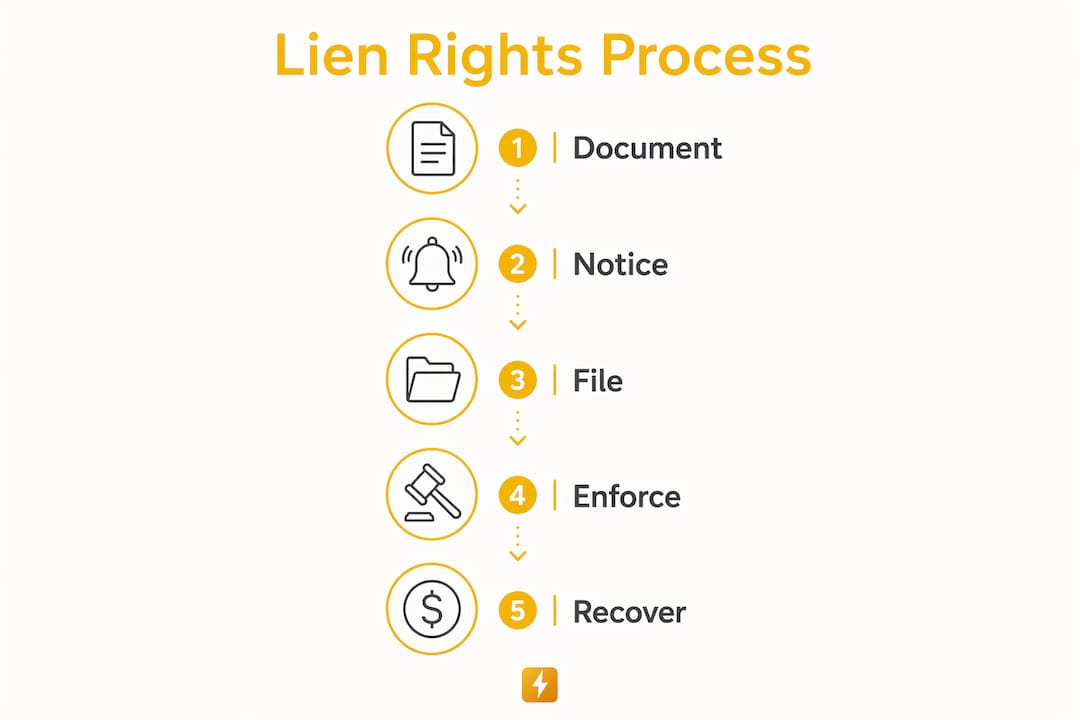
Lien rights protect contractors by converting unpaid labor and materials into a secured property claim that owners, lenders, and title companies must resolve before any sale or refinancing can proceed.
| Point | Details |
|---|---|
| Lien rights create leverage | A recorded lien clouds title and blocks sales or refinancing until the claim is resolved. |
| Deadlines are unforgiving | Missing a preliminary notice or filing deadline permanently eliminates your lien rights, regardless of the work performed. |
| All tiers have rights | Subcontractors and suppliers can file liens without a direct contract with the property owner. |
| Enforcement requires two steps | Recording the lien and filing a foreclosure lawsuit within the statutory window are both required to enforce payment. |
| Precision protects the claim | Lien amounts must match contract-backed quantities; overreaching claims can be invalidated or penalized. |
Lien rights are powerful, but only if you use them correctly
I have seen contractors with legitimate six-figure claims walk away with nothing because they missed a preliminary notice deadline by a week. Not because they did not know lien rights existed. Because they treated lien compliance as something to deal with later, after the payment problem surfaced.
The contractors I respect most treat lien preservation the same way they treat job costing: systematically, from day one, on every project. They send preliminary notices as a matter of routine, not as a signal that they distrust the client. They calendar deadlines the moment they mobilize. They keep a paper trail that would hold up in court, even when they expect to never need it.
The most common mistakes I see are waiver misuse, missed preliminary notices, and poor documentation of change orders. Each one is avoidable with a simple workflow. The complexity of lien law across 50 states is real, but the core discipline is not complicated. Know your state's deadlines. Send your notices. Document your work. Get legal counsel involved before the enforcement window closes, not after.
Lien rights are one of the few legal tools that genuinely level the playing field for contractors against owners and lenders with far more resources. Underutilizing them is leaving your most powerful payment protection sitting unused. If you want to avoid the situations where lien rights become necessary in the first place, start by screening clients before you quote. Understanding how to avoid clients who don't pay is the upstream solution that makes lien management downstream much less stressful.
— Colin
Protect your payment before the project starts
Lien rights are your legal safety net after a payment dispute begins. But the best contractors build their protection earlier, at the client qualification stage. SnapQualify gives you a fast, automated way to screen clients before you commit time and resources to a quote.

When a potential client fills out your SnapQualify intake form, the platform analyzes their responses using AI and experience-based signals to generate a color-coded SnapScore. That score tells you whether the client is a reliable partner or a payment risk before you ever set foot on site. Combined with a solid lien rights workflow, client screening with SnapQualify gives you two layers of financial protection: prevention and enforcement. Your data stays protected under SnapQualify's security protocols, so you can screen confidently without risk to your business information.
FAQ
What is a mechanic's lien and how does it work?
A mechanic's lien is a statutory legal claim that attaches to real property when a contractor, subcontractor, or supplier is not paid for labor or materials they contributed to the improvement of that property. Once recorded, it clouds the title and prevents the owner from selling or refinancing until the claim is resolved.
Can subcontractors file a lien without a contract with the owner?
Yes. Subcontractors and suppliers have lien rights even without direct contract privity with the property owner. Lien law protects all tiers of the payment chain, from general contractors down to material suppliers.
What happens if you miss a preliminary notice deadline?
Missing a preliminary notice deadline permanently eliminates your lien rights for that project, even if the work was completed and payment is clearly owed. California's 20-day and Florida's 45-day notice windows are strict and non-negotiable.
How long do you have to enforce a mechanic's lien?
Enforcement windows vary by state. Illinois, for example, requires a foreclosure lawsuit within two years of recording the lien. Missing the enforcement deadline extinguishes the lien entirely, leaving you without a secured claim.
Can a contract clause waive your lien rights in advance?
In most states, mechanic's lien rights cannot be waived in advance through a contract clause. However, lien waivers signed at the time of payment are enforceable, so always review whether a waiver is conditional or unconditional before signing.