

Efficiently managing multiple trade leads means prioritizing prospects by fit and urgency, then automating follow-up so no opportunity slips through. 41% of companies struggle to follow up with leads quickly, which translates directly to lost revenue and wasted marketing spend. For independent trade contractors, that problem is worse because you are juggling site visits, quotes, and active jobs at the same time. The good news is that a structured system fixes most of it without adding hours to your week.
How to manage multiple trade leads efficiently: the core system
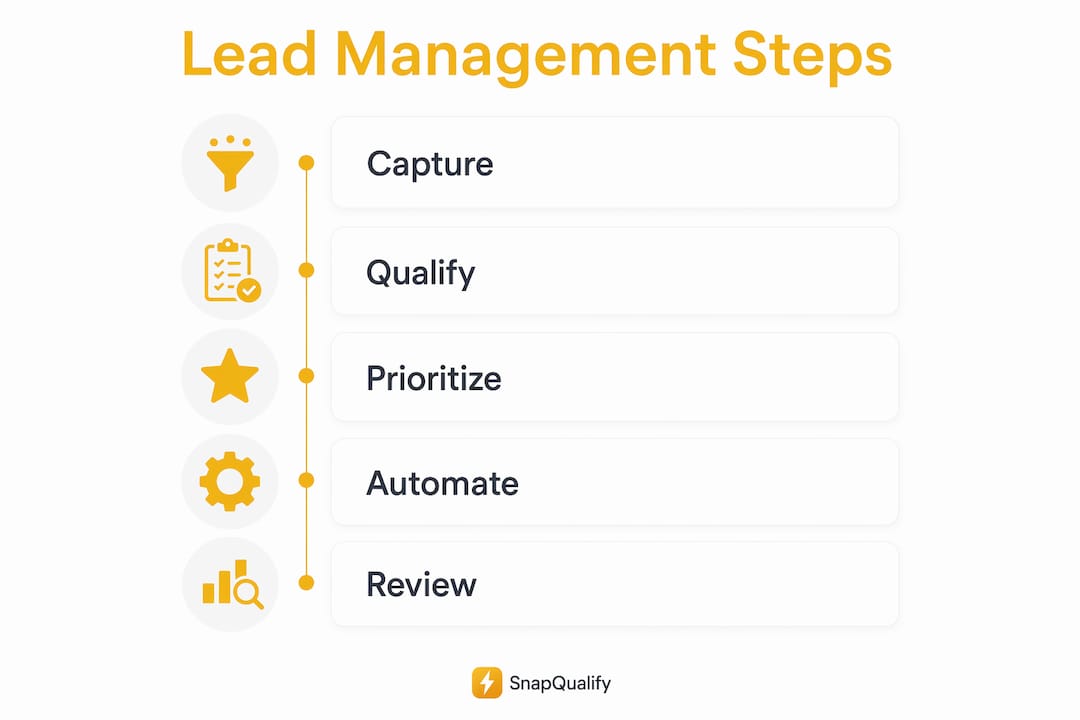
The foundation of efficient lead tracking is a defined pipeline with clear stages. Think of it like a production floor: every lead enters at one end, moves through qualification and follow-up, and exits as a booked job or a closed file. Structured lead management tracks handoffs, sets clear follow-up steps, and moves leads through the pipeline without anything falling through the cracks. Without that structure, you end up chasing the same lead twice or forgetting a warm prospect who was ready to book.
The three core principles are speed, qualification, and consistency. Speed means responding to the right leads fast. Qualification means deciding early whether a lead is worth your time. Consistency means following up the right number of times, not just once or twice.

What tools and systems do you need for trade lead management?
The right tools remove the manual burden of tracking every lead in your head or on a notepad. A CRM or specialized lead management platform gives you a single place to log every inquiry, assign follow-up tasks, and record client details. Digital lead capture methods, including online intake forms, voice capture apps, and business card scanners, feed leads directly into that system without manual data entry.
Automation handles the repetitive work: sending an initial acknowledgment, scheduling follow-up reminders, and flagging leads that have gone cold. The table below shows the main tool categories and what each one does.
| Tool category | Primary function |
|---|---|
| CRM or lead management platform | Centralizes lead records, tracks pipeline stages, assigns tasks |
| Digital intake forms | Captures client details at first contact, reduces manual entry |
| Automation workflows | Sends reminders, acknowledgments, and follow-up sequences |
| Lead scoring tools | Ranks leads by fit, budget, and urgency for prioritization |
| Reporting dashboards | Tracks contact rates, conversion, and follow-up completion |
Pro Tip: Export and process all lead data within 24 hours of capture. Timely lead data export can retain up to 80% of conversion potential by preserving context and momentum before details fade.
How do you qualify and prioritize multiple trade leads?
Lead fit beats lead volume every time. Chasing every inquiry regardless of project type, location, or budget wastes time you could spend on jobs that actually match your capacity. The better approach is to score each lead against a short set of criteria before you invest time in a full quote.
Use a hot, warm, and cold classification system. Hot leads have a clear budget, a defined scope, and a decision timeline within two to four weeks. Warm leads are interested but not yet ready to commit. Cold leads are early inquiries with no clear timeline or budget confirmed.
Collect these details on first contact so you can classify immediately:
- Project type and scope (does it match your trade specialty?)
- Budget range (is it realistic for the work described?)
- Location (is it within your service area?)
- Decision timeline (when do they need the work done?)
- Decision maker (are you speaking to the person who approves the spend?)
- Prior contractor experience (have they worked with a trade contractor before?)
A lead qualification checklist built around these points lets you score a new inquiry in under five minutes. That speed is what makes the system work when you have ten leads coming in at once.
What follow-up strategies work best across multiple leads?
Most deals close after five or more follow-up touchpoints, yet most contractors give up after one or two attempts. Industry best practices recommend 8 to 12 touchpoints using a mix of calls, emails, and messages to maintain consistent engagement without overwhelming the prospect.
The cadence should match the lead temperature:
- Hot leads: Contact within two hours of inquiry. Send a follow-up call or message the next morning if no response. Check in again at the 48-hour mark.
- Warm leads: Respond by the next business day. Follow up every three to five business days for two to three weeks, then move to a monthly check-in.
- Cold leads: Add to a monthly nurture sequence. A short email or text every four weeks keeps you top of mind without burning the relationship.
- All leads: Log every touchpoint in your CRM so you always know where each prospect stands.
- High-value leads: Add a personal phone call at touchpoints three and five. Automation handles the rest.
Responding to hot leads within two hours significantly improves conversion compared to next-day follow-up. Speed signals professionalism and shows the client you take their project seriously.
Pro Tip: Automate initial outreach for all leads, but write personal messages for high-value prospects at key touchpoints. Automation keeps you consistent; personalization wins the premium jobs.
How do you avoid common mistakes when handling multiple leads?
The biggest mistake contractors make is treating every lead the same. A $500 fence repair and a $50,000 kitchen renovation need different levels of attention. Applying the same automated sequence to both wastes your best follow-up energy on low-value work.
Other common pitfalls that cost contractors real money:
- Slow initial response: Waiting more than a day to contact a hot lead hands the job to a competitor.
- No lead context on file: If a team member picks up a lead mid-sequence with no notes, the client has to repeat themselves. That kills trust fast.
- Overloading automation: Automated messages that sound robotic push prospects away on high-value jobs.
- No regular process audit: If you never review which leads converted and why, you repeat the same mistakes.
Maintaining detailed account context, including budget, urgency, and prior conversations, lets any team member pick up a lead without missing a beat. Review your contractor time wasters quarterly and cut anything that slows the pipeline.
How do you use metrics to keep improving your lead process?
Tracking the right numbers tells you exactly where your pipeline leaks. The three metrics that matter most for trade contractors are contact rate, qualified lead rate, and follow-up completion rate.
| Metric | What it measures | Why it matters |
|---|---|---|
| Contact rate | % of leads reached within target window | Shows if your response speed is on track |
| Qualified lead rate | % of leads that meet your fit criteria | Reveals lead source quality |
| Follow-up completion rate | % of leads receiving all planned touchpoints | Flags where sequences break down |
| Pipeline conversion rate | % of qualified leads that become booked jobs | Measures overall system effectiveness |
Review these numbers monthly. If your qualified lead rate drops, tighten your intake questions. If follow-up completion falls, add an automation trigger to catch missed steps. The data tells you where to focus, so you stop guessing and start fixing.
Key Takeaways
Contractors who qualify leads by fit, respond to hot prospects within two hours, and run structured multi-touch follow-up sequences convert significantly more inquiries into booked jobs.
| Point | Details |
|---|---|
| Speed wins hot leads | Contact hot leads within two hours to maximize conversion before a competitor does. |
| Qualify before you quote | Score leads on budget, scope, location, and timeline at first contact to protect your time. |
| Follow up more than twice | Most deals need 8–12 touchpoints; plan a full sequence, not just one or two messages. |
| Log everything | Detailed lead context lets any team member continue a conversation without losing trust. |
| Track your metrics | Monitor contact rate, qualified lead rate, and follow-up completion monthly to find and fix pipeline gaps. |
What I've learned from watching contractors lose good leads
The contractors I see struggle most with lead management are not disorganized. They are just too busy to build the system when things are going well, and too overwhelmed to build it when things slow down. That gap is where opportunities disappear.
Speed paired with qualification is the combination that actually moves the needle. I have seen contractors respond to every lead within an hour but never ask the right questions, so they spend two hours quoting a job that was never going to close. I have also seen contractors with perfect intake forms who wait three days to follow up and lose the job to someone who called back in 20 minutes.
The uncomfortable truth is that automation alone will not save you. It handles the volume, but the relationship is still built by a human. High-value clients notice when every message sounds like a template. A single personal call at the right moment does more than five automated emails. Build the system, then stay in it.
— Colin
Snapqualify helps contractors qualify leads before wasting a quote
Knowing which leads are worth your time is the hardest part of the whole process. Snapqualify is built specifically for trade contractors who need a faster way to screen clients before committing to a site visit or a full quote.
Clients complete a branded intake form covering project scope, budget, and timeline. Snapqualify's AI analyzes the responses and generates a color-coded SnapScore showing client reliability and project fit at a glance. That score gives you the context to prioritize your follow-up immediately. Whether you are a roofer, plumber, electrician, or general contractor, Snapqualify's client screening fits directly into your existing workflow and cuts the time you spend on leads that were never going to convert.
FAQ
How quickly should I respond to a new trade lead?
Contact hot leads within two hours of inquiry. Speed is the key differentiator at this stage, and same-day response significantly outperforms next-day follow-up for conversion rates.
How many follow-ups should I send before dropping a lead?
Plan for 8–12 touchpoints before closing a lead file. Most deals close after five or more follow-ups, so stopping after one or two attempts leaves real revenue on the table.
What is the best way to qualify a trade lead quickly?
Ask about budget, project scope, location, and decision timeline on first contact. A structured intake form or a pre-qualify checklist lets you score a lead in under five minutes.
Why do contractors lose leads even when they respond fast?
Fast response without qualification leads to wasted time on poor-fit projects. Contractors also lose leads by failing to log context, which means follow-up messages feel generic and disconnected from the client's actual situation.
What metrics should I track for lead management?
Track contact rate, qualified lead rate, and follow-up completion rate monthly. These three numbers show you where your pipeline leaks and which part of your process needs adjustment first.