

Construction project conflict is defined as any dispute arising from unclear scope, poor documentation, or miscommunication between project parties. These conflicts cost the industry billions each year in rework, legal fees, and delayed schedules. 72% of scope disputes originate from missed or poorly documented decisions during pre-construction. That single statistic tells you where most of your conflict prevention work needs to happen: before a single shovel hits the ground.
How to reduce construction project conflicts before mobilization
Scope ambiguity is the leading trigger for construction disputes. You can eliminate most of it by auditing your contract documents, addenda, and drawings before work begins. The goal is to build a gap matrix, a simple table that lists every unresolved scope item, assigns an owner, and sets a resolution deadline.
Structured scope alignment meetings are not optional on complex projects. Bring all key subcontractors and stakeholders into one room, confirm responsibilities line by line, and document every decision in writing. Scope disputes that surface in the field cost five to ten times more to resolve than those caught in pre-construction.
Verbal change approvals are one of the most common mistakes project managers make. Set a formal change control protocol from day one: no work proceeds on a change without a written change order, signed by the authorized party. This single rule prevents the majority of scope creep claims.
- Audit contract documents against all addenda and clarifications before mobilization.
- Build a gap matrix with assigned owners and resolution deadlines for every open item.
- Hold a scope alignment meeting with all key parties before work begins.
- Enforce written change orders for every scope modification, no exceptions.
- Confirm subcontractor responsibilities in writing at the kickoff meeting.
Pro Tip: Send a written summary email within 24 hours of every scope alignment meeting. That email becomes your first line of defense if a dispute surfaces six months later.
What role does documentation play in preventing disputes?
Documentation is your legal record. Most construction contracts require written notice of delays or changes within 7–21 days. Miss that window and you forfeit a valid claim, regardless of how strong your case is. That is not a technicality. That is money walking out the door.
Contemporaneous records carry far more weight than reconstructed ones. Photographic records with EXIF metadata provide verifiable, time-stamped evidence that holds up in dispute resolution. A generic photo without metadata is easily challenged. A photo with embedded time and location data is not.
Daily site logs are equally critical. Aggregated daily logs covering weather, manpower, and progress across all subcontractors create an uncontested record for the owner. These logs are your best defense against acceleration claims and concurrent-delay arguments.
- Log daily site activity covering weather, crew counts, and work completed.
- Photograph all conditions using a device that embeds EXIF time and location data.
- Submit written RFIs for every design ambiguity. Never assume.
- Track notice deadlines on a shared calendar so no contractual window is missed.
- Code costs in real time to change orders and claim categories as they occur.
Pro Tip: Real-time cost coding linked to specific change orders builds a defensible audit trail that reconstructed records can never match. Do it daily, not at month-end.
How can BIM and cloud tools cut disputes through better coordination?
Building Information Modeling, known as BIM, is the most effective technology for reducing design-related conflicts before construction begins. BIM clash detection identifies conflicts between structural, mechanical, and electrical systems in a virtual model, eliminating the field surprises that generate change orders and finger-pointing. The principle is straightforward: build it twice virtually so you only build it once in the field.

Cloud-based platforms let all trades work together in a federated 3D model, resolving clashes before mobilization. This removes the "I didn't know" excuse from every subcontractor conversation. When the model is shared and updated in real time, everyone sees the same information.
Here is how the technology stack reduces disputes across project phases:
| Phase | Technology | Conflict Prevented |
|---|---|---|
| Design | BIM clash detection | Structural and MEP conflicts |
| Pre-construction | Federated 3D model review | Subcontractor coordination gaps |
| Execution | Cloud document management | Version control disputes |
| Closeout | Centralized cost records | Billing and change order claims |
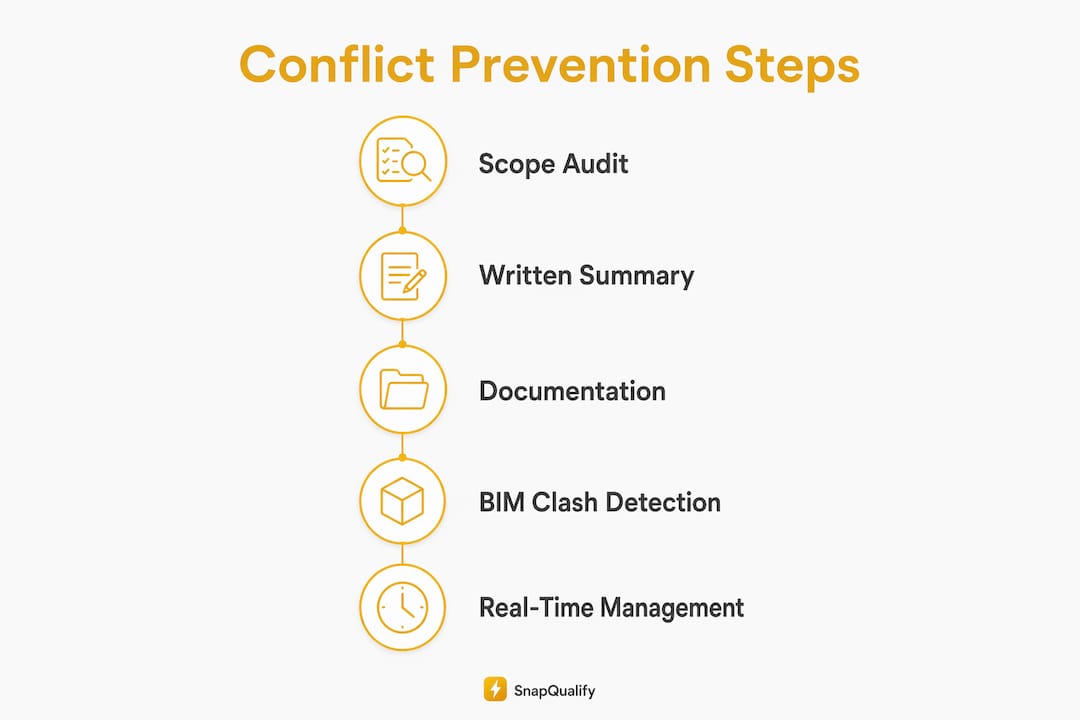
Transparency in cost data through centralized cloud software reduces the misunderstandings that escalate into formal disputes. When every party sees the same cost record, there is no room for "that's not what we agreed to."
Prefabrication is a direct benefit of clash-free models. When the model is clean, fabricators can produce components off-site with confidence. That reduces costly field improvisation, which is one of the most common sources of labor disputes between general contractors and subcontractors.
What steps help project managers manage conflicts in real time?
Conflict prevention is an active skill, not a passive one. You need clear decision rights and communication norms established before mobilization, not improvised after the first dispute surfaces. Project managers who wait for conflict to appear before creating a response process always pay more to resolve it.
Embedding dispute avoidance governance into the project lifecycle means defining who has authority to approve changes, who escalates unresolved issues, and at what timeline. Senior-level escalation paths prevent field-level disagreements from festering into formal claims.
Weekly coordination meetings serve a specific conflict-management function. They are not status updates. They are early-warning systems. Use them to surface disagreements while they are still cheap to resolve.
- Define decision rights in writing at project kickoff: who approves, who escalates, and by when.
- Hold weekly coordination meetings with a standing agenda item for open disputes.
- Set a 48-hour rule for responding to written RFIs and change order requests.
- Build contingency into the schedule for known risk areas, not just the budget.
- Assign a single point of contact for each subcontractor to reduce communication fragmentation.
Pro Tip: Successful projects treat dispute avoidance as a professional process, not a personality contest. When you embed it into governance, it stops depending on who is in the room that day.
Key takeaways
Proactive conflict prevention, starting in pre-construction with documented scope alignment, rigorous daily records, and structured escalation protocols, is the most cost-effective way to minimize construction disputes.
| Point | Details |
|---|---|
| Scope alignment first | Audit contracts and build a gap matrix before mobilization to catch disputes early. |
| Written records protect claims | Missing the 7–21 day notice window forfeits valid claims under most contracts. |
| BIM prevents design conflicts | Clash detection resolves structural and MEP conflicts before they reach the field. |
| Real-time cost coding | Coding costs daily to change orders builds a defensible audit trail. |
| Governance beats goodwill | Clear decision rights and escalation paths prevent field disputes from becoming formal claims. |
The mistake I see most often on conflicted projects
Most project managers I have worked with know the rules. They know they need written change orders. They know they need daily logs. They know they need to send that follow-up email. The problem is not knowledge. It is discipline under pressure.
When a project gets busy, documentation is the first thing that slips. That is exactly when disputes are most likely to form. The job site is moving fast, verbal agreements start replacing written ones, and three months later nobody can agree on what was decided.
The contractors who consistently avoid disputes are not smarter. They are more systematic. They treat documentation as part of the work, not as paperwork that happens after the work. They also screen their clients before the project starts, because a difficult client is a conflict waiting to happen regardless of how good your processes are.
Technology helps, but only if it matches your project size. BIM coordination makes sense on a $5 million commercial build. It is overkill on a $200,000 residential remodel. Know your project, pick your tools accordingly, and never let the tool become the excuse for skipping the fundamentals.
— Colin
How Snapqualify helps you avoid conflict before it starts
Many construction disputes trace back to the client relationship, not the contract language. A client who misrepresents their budget, changes scope without warning, or disputes every invoice creates conflict that no documentation system can fully prevent.
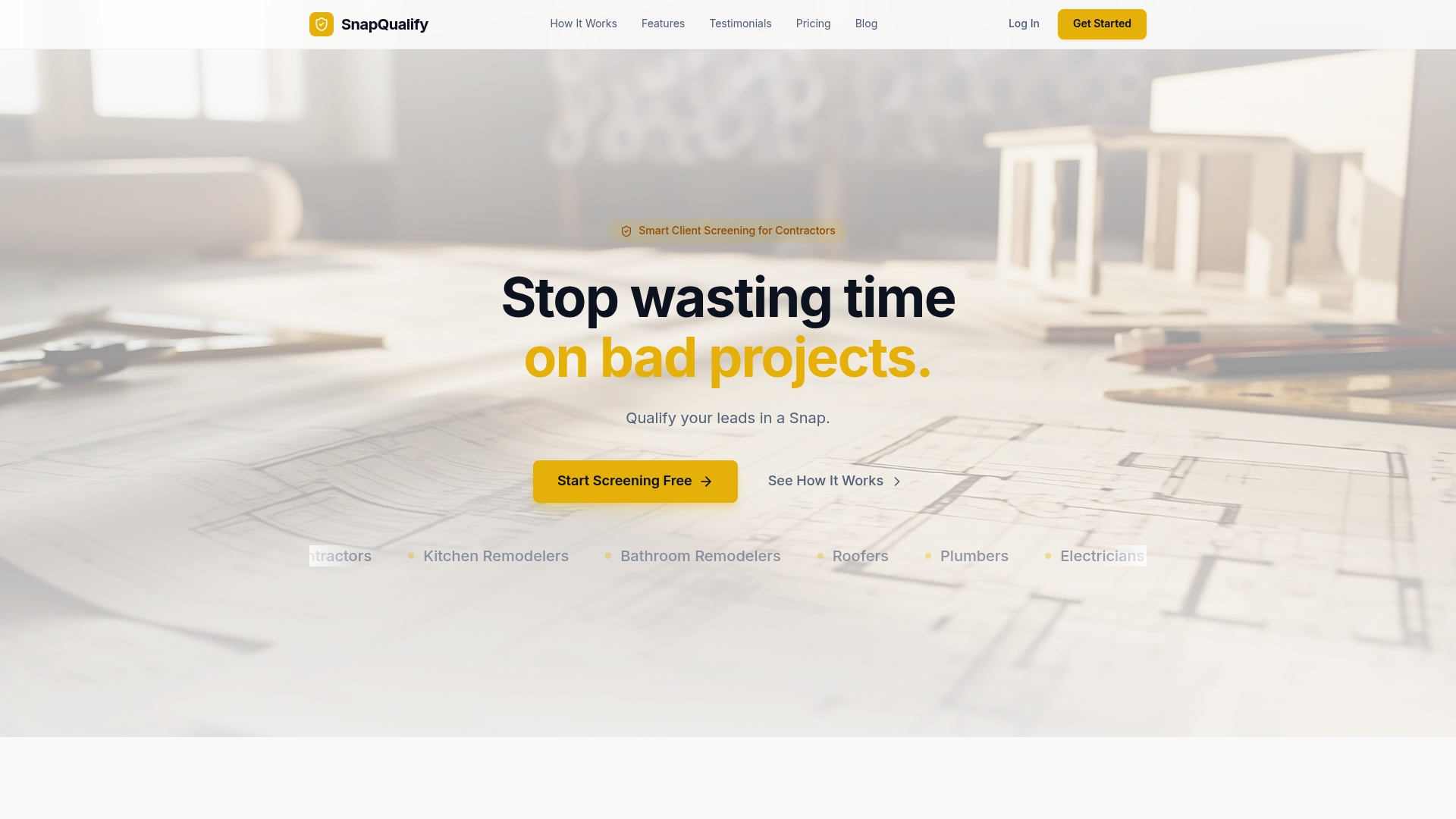
Snapqualify screens clients before you commit to a project. Its AI-powered intake forms evaluate project scope, budget clarity, and client reliability, then generate a color-coded SnapScore so you know what you are walking into. Contractors who qualify leads early avoid the problem clients who generate the most disputes. Snapqualify also takes data security seriously, keeping your client records and project documentation protected. Fewer bad clients means fewer conflicts, full stop.
FAQ
What causes most construction project conflicts?
72% of scope disputes originate from missed or poorly documented decisions during pre-construction. Unclear scope, verbal agreements, and missed notice deadlines are the top three triggers.
How does documentation prevent construction disputes?
Contemporaneous records, including daily logs, photos with EXIF metadata, and written RFIs, create a defensible record that protects your claims. Missing contractual notice windows of 7–21 days forfeits those claims entirely.
What is a gap matrix in construction?
A gap matrix is a table that lists every unresolved scope item before mobilization, assigns an owner, and sets a resolution deadline. It is the most direct tool for preventing scope disputes before work begins.
How does BIM reduce construction conflicts?
BIM clash detection identifies conflicts between building systems in a virtual model before construction starts, eliminating the field surprises that generate change orders and subcontractor disputes.
Can screening clients reduce project conflicts?
Screening clients before signing a contract removes the most common source of relationship-driven disputes. Platforms like Snapqualify evaluate client reliability and budget clarity upfront, so you avoid problem clients before they cost you time and money.