

Late payments to contractors are defined by the construction industry as any payment received beyond the contractually agreed date, and invoice disputes, missing documentation, and multi-step approval bottlenecks are the three root causes responsible for the majority of delays. Understanding what causes late payment contractors face every day is the first step toward fixing the problem at the source rather than chasing checks after the fact. This guide breaks down each cause in detail, covers how retainage and legal timelines compound the problem, and gives you concrete steps to protect your cash flow in 2026. New California law SB 440, pay application portals, and lien waiver compliance all factor into the picture.
What causes late payment to contractors most often?
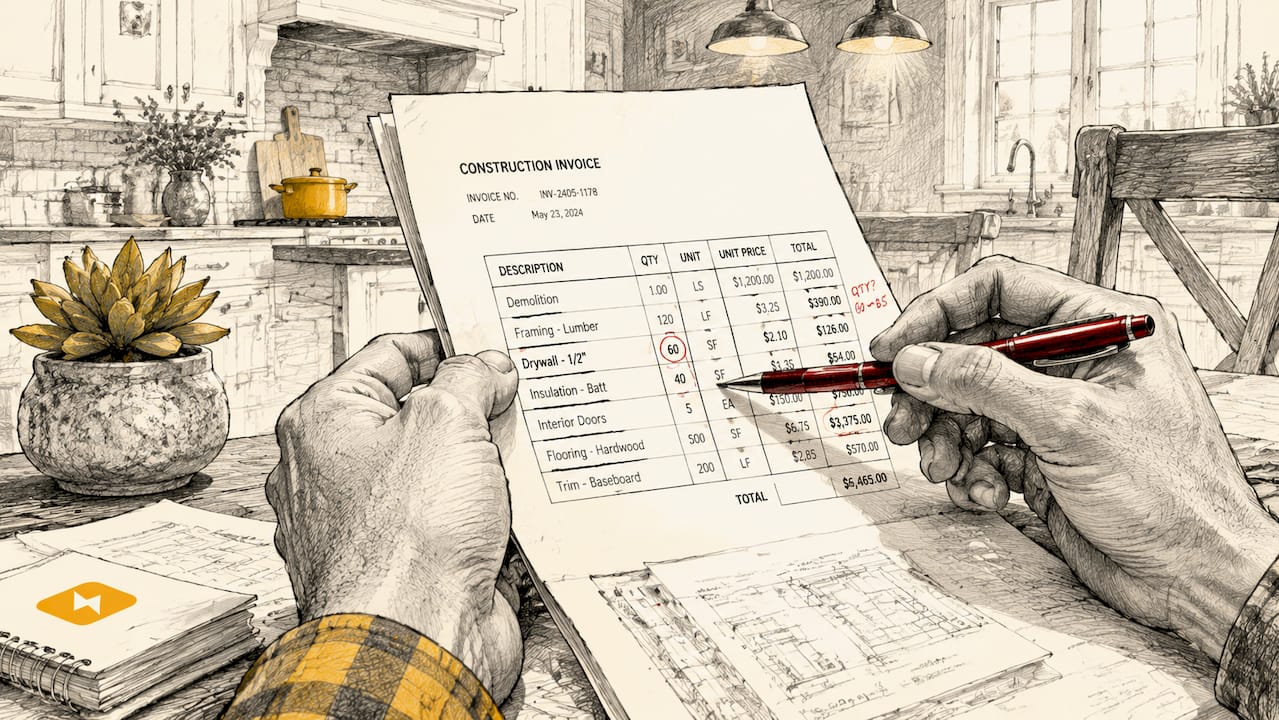
Invoice disputes are the single largest driver of delayed payments in construction. A dispute over quantities or prices stops the payment clock entirely until the issue is resolved, which can take weeks. The most common mismatches involve quantities certified lower than what you claimed, unit prices that differ from the purchase order or contract, and work that cannot be verified because site documentation is incomplete.
Here is what typically triggers a contractor payment dispute:
- Quantity certification gaps. The quantity surveyor certifies fewer units than your invoice claims, and no backup documentation exists to challenge the figure.
- Unit price mismatches. Your invoice references a rate that differs from the signed contract or approved change order.
- Wrong project or contract reference. An invoice referencing the wrong job number gets routed to the wrong approval queue and sits there.
- Incomplete work verification. No signed delivery note, inspection record, or completion certificate means the approver cannot confirm the work happened.
Each of these triggers an invoice query, and that query pauses the payment cycle. The practical fix is to treat every pay application like a legal document. Attach backup for every line item before you submit.
Pro Tip: Flag any quantity or price discrepancy with your GC or owner in writing before you submit the invoice. Resolving it upstream takes hours. Resolving it after submission takes weeks.
How missing documents and lien waivers delay your payment
Documentation failures are the second major cause of contractor payment issues, and they are almost entirely preventable. Missing or incorrect documents can cause you to miss a payment window entirely, with no notification from the payer that anything went wrong.
The documents most likely to hold up your pay app approval include:
- Lien waivers. Missing signatures, wrong waiver types (conditional vs. unconditional), or amounts that do not match the invoice trigger back-and-forth that can add two to four weeks to your payment timeline. A conditional lien waiver only releases the lien upon actual fund clearance, so mismatched amounts stall processing immediately.
- Certificates of insurance and licenses. If your COI or contractor's license has expired, most GC payment portals will reject the pay app automatically.
- Completion certificates and delivery notes. Without a signed document confirming the work is done, the approver has no basis to release funds.
- Compliance paperwork. Safety policies, certified payroll on prevailing wage jobs, and subcontractor agreements must all be current and on file.
Pro Tip: Build a document checklist specific to each GC or owner you work with. Submission requirements vary by portal and by contract. One missed field in a payment portal like GCPay or Textura can reject your entire pay app without warning.
The shift to digital payment portals has added a new layer of risk. Failing to submit through the correct channel or missing the portal's cutoff date can delay payment by a full billing cycle.
| Document type | Common failure | Result |
|---|---|---|
| Lien waiver | Wrong type or missing signature | Payment held pending correction |
| Certificate of insurance | Expired policy dates | Automatic portal rejection |
| Completion certificate | Not signed by owner or GC | Approver cannot certify work |
| Compliance paperwork | Outdated safety or payroll docs | Pay app flagged for review |
Why approval bottlenecks stall payments even when your paperwork is perfect
Even a flawless pay application can sit unpaid for weeks because of how approval chains work in construction. The typical approval sequence runs from quantity surveyor sign-off to commercial director review to finance processing. Each handoff is a potential stall point.
The specific bottlenecks that slow payments most often include:
- Single approver dependency. If the one person authorized to approve your pay app is traveling, sick, or managing a project crisis, your invoice waits.
- Email overload. Manual approval requests buried in an inbox do not get escalated. They get forgotten.
- Month-end batch processing. Many finance teams process invoices in batches at month-end. Miss the cutoff by one day and you wait 30 more days.
- Mobile access gaps. Approvers who are on-site all day cannot process invoices without mobile-friendly systems, so approvals pile up.
- Overloaded commercial teams. A commercial director managing 15 active projects does not have the bandwidth to review every pay app the day it arrives.
The fix is not to submit and wait. Follow up within 48 hours of submission to confirm receipt and ask for an expected approval date. That single habit removes your invoice from the forgotten pile and puts it on someone's radar.
How retainage and contract terms extend payment timelines
Retainage is the percentage of each payment withheld until project milestones are met, and it is one of the most misunderstood factors affecting contractor payments. Subcontractors often complete their scope months before the project reaches substantial completion, yet retainage is tied to the whole-project milestone rather than their individual work. That means you can finish your work in March and not see your retainage until December.
Typical retainage windows run from 30 to 90-plus days after substantial completion, and upstream risks like owner or GC insolvency can extend that indefinitely. Retainage release is often delayed not because the owner refuses to pay but because the final payment application is incomplete. Submitting a clean, complete final pay app with all required closeout documents is the fastest path to retainage release.
New legal protections are shifting the balance. California SB 440, effective in 2026, requires prompt payment with 2% monthly interest on late undisputed amounts and gives contractors the statutory right to suspend work if an owner fails to pay on time. Understanding your rights under your state's prompt payment statutes is not optional. It is a cash flow strategy.
Cash flow pressure across the payment chain
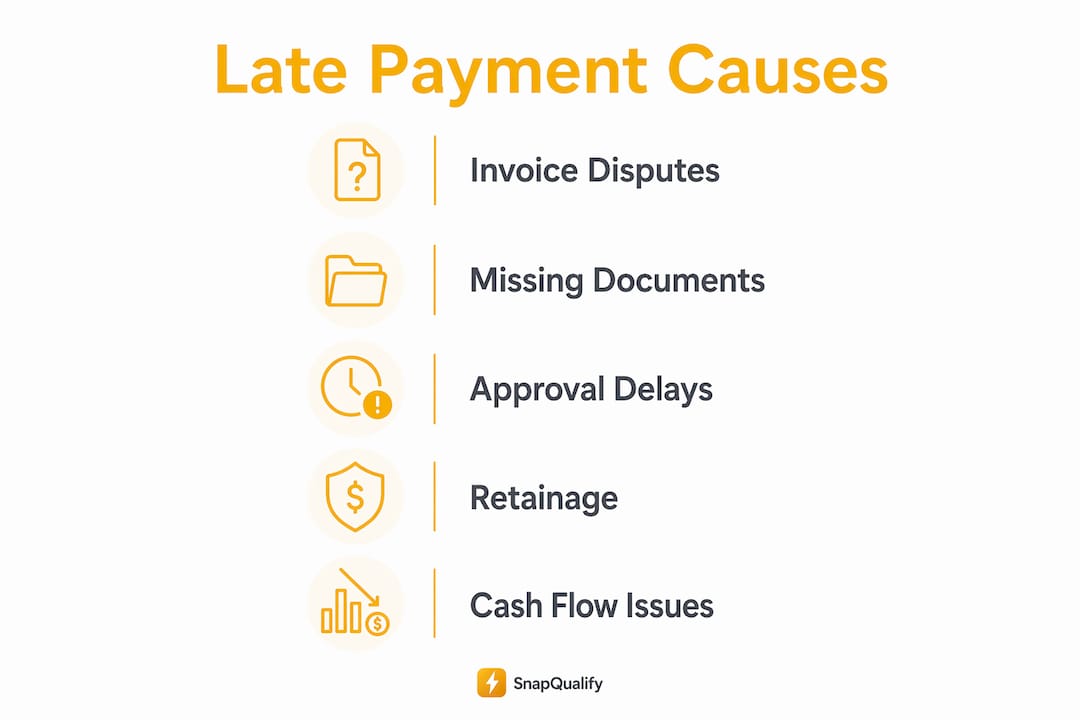
Late payments do not start with you. They often start three or four tiers up the payment chain, where owners delay draws from lenders, GCs absorb that delay, and subcontractors feel it last. The impact of late payments on contractors is measurable: 70% of contractors face regular payment delays, and 82% wait 30 or more days past their expected payment date.
The downstream effects compound quickly:
- 56% of subcontractors have declined work opportunities because cash flow risk from delayed payments made the project too risky to take on.
- Workforce availability shrinks when subs cannot make payroll on time.
- Project schedules slip when material orders are delayed because the contractor cannot front the cost.
Better billing discipline and AR management reduce exposure significantly. Tracking every open invoice, following up on a set schedule, and knowing your lien rights all put you in a stronger position than waiting and hoping. For a deeper look at managing your cash position, the guide on contractor cash flow covers the mechanics in detail.
Key takeaways
Late payments to contractors are caused primarily by invoice disputes, documentation failures, and approval bottlenecks, and each cause has a specific, preventable fix.
| Point | Details |
|---|---|
| Invoice disputes stop the clock | Resolve quantity and price mismatches before submitting your pay app to avoid payment holds. |
| Documentation gaps cause silent rejections | Build a per-client document checklist covering lien waivers, insurance, and completion certificates. |
| Approval chains create predictable delays | Follow up within 48 hours of submission to confirm receipt and get an expected approval date. |
| Retainage timing is contractual | Negotiate scope-based retainage triggers and submit complete closeout documents to accelerate release. |
| New legal tools exist | California SB 440 and similar state laws give contractors interest rights and suspension rights for nonpayment. |
The pattern I keep seeing contractors miss
After years of watching contractors fight for money they are already owed, the pattern is almost always the same. The problem was not the client's intent. It was a gap in the paperwork or a missed step in the process that gave the other side a legitimate reason to pause payment.
Most late payment issues are rooted in documentation and process failures, not bad faith. That is actually good news, because process failures are fixable. What I have found works is treating the pay application as a product you deliver, not a form you fill out. Every line item needs backup. Every document needs to be current. Every submission needs a confirmation.
The contractors who get paid on time are not the ones with the best lawyers. They are the ones with the tightest admin systems. They know their lien rights, they understand their lien rights protect them as leverage before a dispute escalates, and they use new laws like SB 440 as a negotiating tool rather than a last resort. The industry is slowly building better infrastructure, but you cannot wait for that. Build your own process discipline now.
— Colin
Screen clients before the payment problem starts
The best time to address payment risk is before you sign a contract. Snapqualify is built specifically for trade contractors and construction businesses who want to qualify clients before investing time and resources in a project. The platform uses intelligent intake forms and AI-driven risk analysis to generate a color-coded SnapScore that signals client reliability and project suitability. Roofers, electricians, plumbers, HVAC technicians, and general contractors use it to filter out high-risk clients before a single estimate goes out. If you want to reduce scope creep, late payments, and difficult clients from the start, screen clients smarter with Snapqualify. Your data stays protected under Snapqualify's security standards throughout the process.
FAQ
What is the most common cause of late payment to contractors?
Invoice disputes are the leading cause, including mismatches in quantities certified, unit prices, or missing work verification. These disputes stop the payment clock until fully resolved.
How do lien waivers cause contractor payment delays?
Lien waiver mistakes such as missing signatures, wrong waiver types, or amounts that do not match the invoice trigger correction cycles that can add weeks to your payment timeline.
What is retainage and why does it delay payments?
Retainage is a percentage of each payment withheld until project milestones are met. Subcontractors often wait months after completing their scope because retainage is tied to whole-project completion rather than their individual work.
What does California SB 440 mean for contractors in 2026?
SB 440 requires owners to pay undisputed amounts promptly and imposes 2% monthly interest on late payments. It also gives contractors the right to suspend work if payment is not made on time.
How can contractors reduce the risk of payment delays?
Submit complete pay applications with all required backup documents, follow up within 48 hours of submission, and understand your lien rights and prompt payment statutes in your state.