
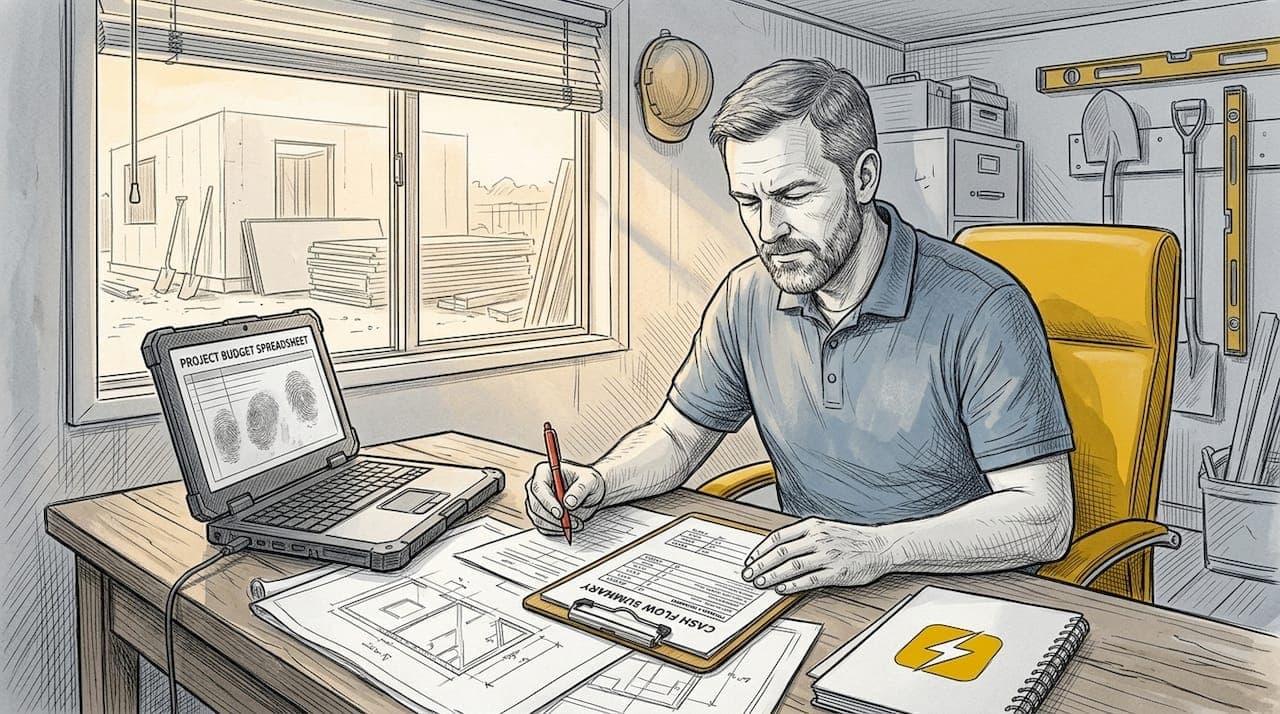
You can finish a profitable project and still miss payroll. That's the frustrating reality of contractor cash flow, and it catches more contractors off guard than you'd expect. What is contractor cash flow, exactly? It's the movement of actual money in and out of your business during a project, and it has almost nothing to do with what your income statement says. Your contracts might look great on paper, but if clients pay late, retainage sits locked up, and material bills hit before milestone payments arrive, you're running on fumes. This guide covers the fundamentals, the traps, and the fixes.
Table of Contents
- Key Takeaways
- What contractor cash flow actually means
- Reading your cash flow statement
- Common contractor cash flow problems
- How to improve contractor cash flow
- My take on cash flow and contractor survival
- Keep your client data as secure as your cash flow
- FAQ
Key Takeaways
| Point | Details |
|---|---|
| Cash flow is not profit | You can show profit on paper while running out of real cash to pay crew and suppliers. |
| Timing creates the gap | Construction outflows hit before inflows arrive, sometimes by weeks or months. |
| Three cash flow categories matter | Operating, investing, and financing activities each reveal a different source of cash pressure. |
| Retention compounds the problem | Retainage held for 12+ months ties up significant capital that contractors often underestimate. |
| Forecasting prevents surprises | A rolling 13-week cash flow forecast gives you week-by-week visibility before problems hit. |
What contractor cash flow actually means
Contractor cash flow equals all the money coming into your business minus all the money going out, measured across a defined period. It's not a single number at the end of a job. It's a running picture of your liquidity at any point in a project's life.
Inflows include:
- Client deposits collected at contract signing
- Progress payments tied to completed milestones
- Retention releases at project completion or warranty expiry
- Change order payments approved during the job
Outflows include:
- Material and equipment purchases
- Labor and subcontractor payments
- Overhead costs like insurance, fuel, and office expenses
- Equipment financing or lease payments
The distinction between cash flow and profit matters more in construction than almost any other industry. Cash flow and profit differ because cash flow tracks actual money movement, while profit is an accounting result calculated after all revenues and expenses are recorded. You can recognize $200,000 in revenue on a commercial fit-out while waiting 45 days for the client to actually send you the check. That gap is where contractors get hurt.
Construction projects also follow a predictable cash flow pattern. You spend money upfront on mobilization, permits, and materials before you ever invoice. Initial project cash flow is negative because outflows happen weeks before certified payments arrive 14 to 30 days after invoice submission. That window between spending and receiving is called the cash gap, and it is the central challenge of understanding cash flow for contractors.
Reading your cash flow statement
Most contractors either never look at a cash flow statement or glance at the bottom line and move on. Breaking it into its three components tells a far more useful story.
Cash flow statements in construction break down into operating, investing, and financing activities. Here's what each one tells you:
| Category | What it includes | What a problem looks like |
|---|---|---|
| Operating | Client payments vs. job costs, payroll, overhead | Negative despite active projects |
| Investing | Equipment purchases, asset sales, tool upgrades | Draining reserves during growth |
| Financing | Business loans, credit lines, loan repayments | Over-reliance on borrowing to cover operations |
Segmenting cash flow this way clarifies whether your problems come from job operations or financial decisions. If your operating cash flow is healthy but your financing cash flow is negative every month, you borrowed too aggressively. If operating cash flow is chronically negative, your billing and collections process needs fixing.

Pro Tip: Run your cash flow statement monthly by category, not just annually. A problem that shows up in December started in March. Catching it in March means you still have options.
Common contractor cash flow problems
Here's where most contractors run into serious trouble. The job is going well. The client seems happy. But money is constantly tight. That's not bad luck. It's a specific set of patterns.
Retention holdbacks are the most underestimated cash drain in construction. Retainage is often held 12 or more months on a contract, meaning 10% of your billings on an $800,000 project sit locked up until after final completion, punch-lists, and sometimes warranty periods. You paid your subs. You bought the materials. But that $80,000 is someone else's working capital for the better part of a year.
Payment approval lags add another layer. Even when your invoice is submitted on time, clients or general contractors take 30 to 60 days to process and approve it. By the time the check clears, your next cycle of outflows has already started.
There's also a dangerous misconception around working capital. Working capital and available cash are not the same thing. Your balance sheet might show healthy current assets, but those assets include accounts receivable, work in progress, and materials on hand. None of that pays your crew on Friday.
Many cash flow issues for contractors earning over $1 million in revenue come from timing mismanagement, not from lacking enough business. You don't have a revenue problem. You have a collections timing problem.
Contractors who rely on percentage-of-completion accounting face an added trap. Recognizing revenue based on project progress looks great on paper but doesn't account for the actual timing of cash receipts, retention deductions, or payment disputes.
Understanding contractor business risk means recognizing that client payment behavior is one of the biggest variables in your cash flow equation. Slow-paying clients are not just annoying. They are a direct threat to your liquidity.
How to improve contractor cash flow
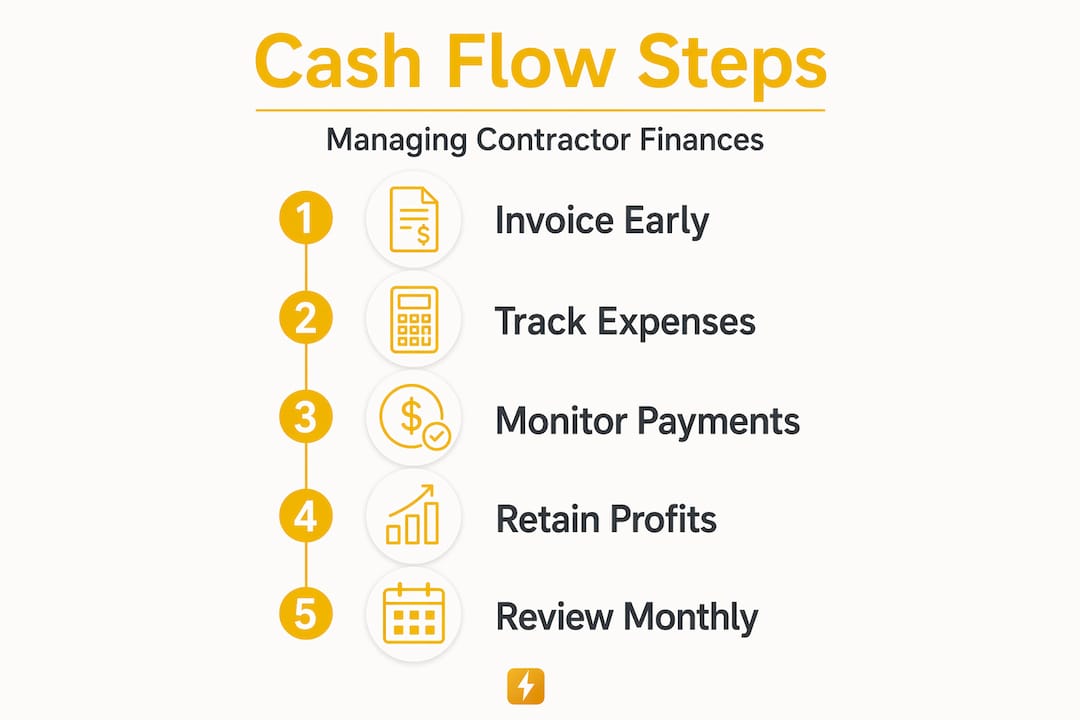
You don't need a CFO to fix your cash flow. You need consistent habits and a few smart systems.
-
Build a rolling 13-week cash forecast. A rolling 13-week forecast tracks expected inflows minus retainage and compares them to weekly outflows by category. It gives you a clear picture of when your balance will dip below safe operating levels, weeks before it actually happens.
-
Front-load your payment schedule. Negotiate deposits of 20 to 30% before work begins. Structure milestone payments so your inflows match or slightly lead your outflow curve. Don't wait until 50% completion to receive your first check.
-
Align subcontractor payments with collections. Pay your subs after your client pays you, not before. Build pay-when-paid clauses into subcontractor agreements where your state allows it. This protects your cash gap without damaging relationships.
-
Manage supplier terms actively. Adjusting payment terms with suppliers is a direct lever on your cash position. Negotiate net-30 or net-45 terms with material vendors so your outflows land closer to your inflow timing.
-
Run a retention register. Track every retainage amount, the contract it belongs to, and the expected release date. This turns a hidden asset into a manageable receivable. Follow up on retention like you would any unpaid invoice.
-
Screen clients before you quote. Knowing how to avoid clients who don't pay before a project starts is cheaper than chasing checks after. Late-paying clients are often identifiable before you ever break ground.
Pro Tip: When scaling your contracting business, every new project you take on increases the complexity of your cash conversion cycle. Growth burns cash. Plan for it before you say yes to a bigger job.
My take on cash flow and contractor survival
I've seen contractors with six-figure backlogs lose sleep over making payroll. That's not a business problem. It's a cash timing problem, and they're two very different things.
In my experience, the contractors who struggle most with cash flow aren't the ones with too little work. They're the ones who treat billing as an afterthought. They finish a phase, wait a few days to invoice, accept approval delays without pushing back, and let retention sit unclaimed for months because it feels awkward to ask. That discipline gap costs real money.
What I've learned is that forecasting is the skill that separates contractors who scale from those who stay stuck. When you know, eight weeks in advance, that you'll have a $40,000 gap in week ten, you can negotiate a draw, delay a discretionary purchase, or accelerate an invoice. When you find out in week nine, your only option is stress.
The importance of cash flow for contractors comes down to this: revenue keeps you busy, but cash flow keeps you in business. Master the timing, and everything else gets easier.
— Colin
Keep your client data as secure as your cash flow
Protecting your cash flow starts with knowing who you're working with. Snapqualify helps contractors screen clients before the job starts, reducing the risk of payment delays, scope creep, and problem clients that drain your working capital. Every intake form you send through Snapqualify is backed by secure data handling that protects your clients' information and your business records. You've worked hard to build a financially stable contracting operation. The right client screening process keeps it that way. See how Snapqualify fits into your workflow.
FAQ
What is contractor cash flow in simple terms?
Contractor cash flow is the actual money moving in and out of your business during a project. It differs from profit because it tracks real payment timing, not accounting results.
Why do contractors have cash flow problems even on profitable jobs?
Timing is the issue. Outflows like materials and labor happen before client payments arrive, and retainage can be held for 12 or more months, creating a gap between spending and collecting.
What is the cash gap in construction?
The cash gap is the period between when you pay costs upfront and when your client actually pays you. Managing this gap is the core challenge of construction cash flow management.
How do I improve my contractor cash flow fast?
Start by front-loading your payment schedule, sending invoices immediately after milestones are reached, and following up on retention balances. A rolling 13-week forecast will show you where your next pressure point is.
What is the difference between cash flow and working capital for contractors?
Working capital is the accounting difference between current assets and current liabilities. Available cash is what you can actually spend today. Accounts receivable and work in progress count as working capital but cannot pay your crew on Friday.