

Construction project vetting is defined as a systematic due diligence process that evaluates the legal, financial, technical, and risk factors of a project before any work begins. It acts as a critical stage-gate between a project proposal and a final business case, filtering out liabilities before they become your problem. For trade contractors and construction business owners, skipping this step is one of the fastest ways to end up with a money-losing project, a difficult client, or a legal dispute you never saw coming. The industry term for this process is "prequalification" when applied to contractors, and "project screening" when applied to the project itself. Both are part of what is construction project vetting as a whole.
What is construction project vetting, and why does it matter?
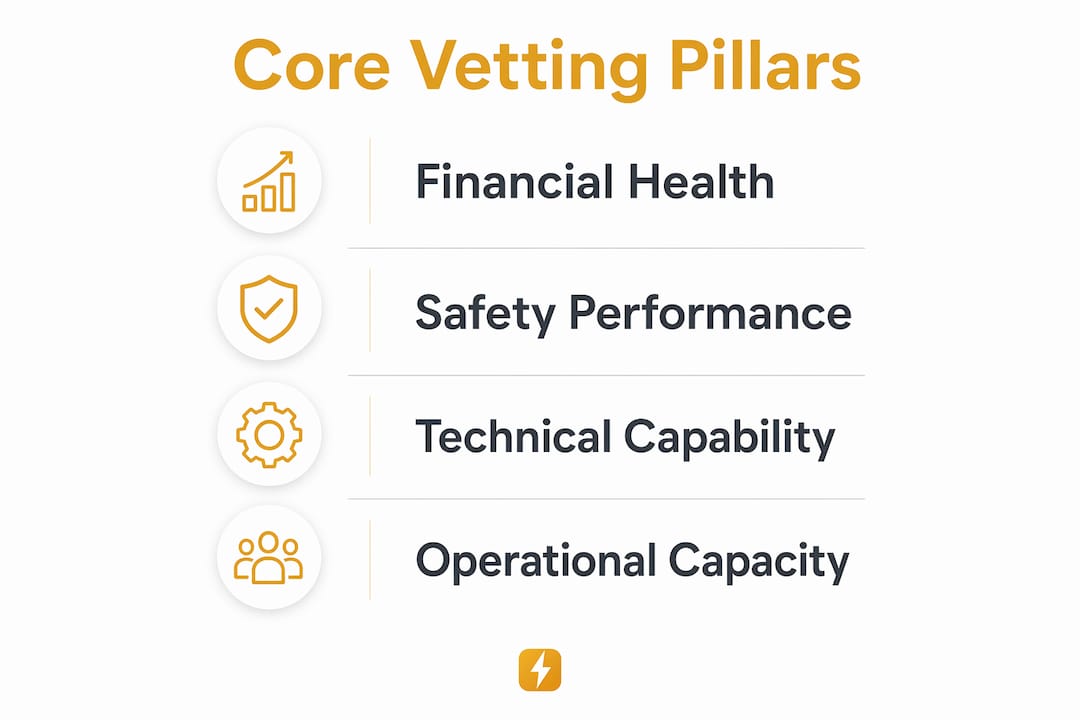
Construction project vetting is the process of confirming that a project, and the people attached to it, meet your minimum standards before you commit time and resources. The vetting process covers four core areas: financial stability, safety history, technical capability, and operational capacity. Miss any one of these, and you expose your business to cost overruns, scheduling failures, or worse.
The stakes are real. Failing to vet thoroughly is a leading cause of project failures and reputational damage in construction. That is not a warning to take lightly when your business name is on every job you touch.

What are the core pillars of the construction project vetting process?
Effective vetting organizes evaluation around four pillars. Each one addresses a different category of risk, and all four must be checked before you sign anything.
1. Financial health
A contractor or client's financial position tells you whether they can actually fund the project through completion. Request financial statements, proof of bonding, and current insurance certificates. Also check contractor cash flow patterns, since a contractor stretched thin on other jobs will deprioritize yours.
2. Safety performance
EMR ratings and OSHA 300 logs are the two documents that reveal a contractor's real safety culture. A high Experience Modification Rate signals above-average claims history, which raises your liability exposure and insurance costs directly. Never accept a verbal safety record. Require the documents.
3. Technical capability
Verify active licenses, confirm relevant project references, and check that the contractor has completed work of similar scope and complexity. A roofing contractor with no commercial experience is a risk on a commercial job, regardless of how low their bid is.
4. Operational capacity
Ask about current workload and available workforce. A contractor who is already at capacity will struggle to staff your project adequately. This is one of the most overlooked checks in the construction vetting process, and it causes more scheduling delays than most contractors expect.
Pro Tip: Request a list of active projects alongside your prequalification documents. If a contractor is running five jobs simultaneously with a crew of eight, your project will feel that strain.
How is project-level feasibility assessed during construction vetting?
Project-level vetting goes beyond the people involved. It examines whether the project itself is viable given site conditions, regulatory requirements, and environmental constraints. This is where project screening becomes a ranked evaluation, not just a checklist.
A structured feasibility review covers four areas:
- Site and zoning constraints. Confirm that the intended use aligns with local zoning codes. A project that requires a variance adds months and uncertainty to your timeline.
- Environmental impact. Assess soil conditions, drainage, and any protected land designations. Environmental issues discovered mid-project are among the most expensive surprises in construction.
- Municipal permit compliance. Identify every permit required before breaking ground. Digital permit tracking tools and multistage approval workflows prevent unauthorized phase starts and keep regulatory oversight manageable.
- Strategic alignment and risk ranking. Not every project deserves equal attention. Project screening creates a ranked list of initiatives evaluated by urgency, risk, and potential return. This guides where you direct your capital and analytical focus.
| Feasibility factor | Key question | Risk if ignored |
|---|---|---|
| Zoning and land use | Does the project use match local codes? | Permit denial, costly redesign |
| Environmental constraints | Are there protected areas or soil issues? | Mid-project shutdowns, fines |
| Permit compliance | Are all approvals secured before each phase? | Unauthorized starts, legal exposure |
| Strategic alignment | Does this project fit your portfolio goals? | Resource drain, opportunity cost |
What are best practices for verifying subcontractors and contractors?
Document collection is not the same as verification. Third-party verification through licensing boards, bonding agents, and lien records is what separates a real vetting process from a paperwork exercise. Contractors under pressure to fill a bid slot often skip this step. That shortcut is where hidden risk enters your project.
Apply these verification practices consistently:
- Contact bonding agents directly. Confirm bond amounts, active status, and any claims history. A bond that lapsed three months ago tells you something a certificate copy will not.
- Check lien records. Outstanding liens against a subcontractor signal financial distress and potential disputes that could attach to your project.
- Confirm licenses with the issuing board. Licenses can be suspended without the contractor notifying you. A quick call or online check takes two minutes and removes significant risk.
- Vet every contractor equally. Relationship bias is one of the most common vetting failures. Bypassing the process for a familiar name introduces the same risks as skipping it for a stranger. Consistent standards protect you from both.
- Enforce a standardized workflow. Document your decision criteria and apply them to every bid. Defensible decisions require a paper trail, especially if a project goes sideways and disputes follow.
Pro Tip: Build a simple scoring sheet with weighted criteria for financial health, safety record, and technical fit. Scored evaluations remove subjectivity and make your selection process auditable.
How does construction vetting reduce risk and improve project outcomes?
Thorough vetting is the most cost-effective risk management tool available to a contractor. Choosing bidders without careful vetting increases exposure to schedule delays, change orders, workforce disruptions, and strained client relationships. Each of those outcomes costs more to fix than the vetting process costs to run.
Vetting also protects your reputation. A subcontractor who fails on your job reflects on your business, not just theirs. Consistent, documented vetting workflows reduce the risk of costly delays and support legal compliance when disputes arise.
Lowest-cost selection does not guarantee project success. Prioritizing qualifications and past performance over price acts as insurance against rework and delays that erode your margin. The bid that saves you $8,000 upfront can cost $40,000 in change orders if the contractor lacks the capacity to deliver.
Continuous vetting beyond project start, such as monitoring permit pull history, provides proactive risk indicators that reactive inspections miss. Catching a compliance issue in week two is far less damaging than discovering it in week twelve.
Key Takeaways
Construction project vetting is the structured due diligence process that protects contractors from financial loss, legal exposure, and reputational damage by evaluating projects and contractors before work begins.
| Point | Details |
|---|---|
| Vetting is a stage-gate | It filters out risk between project proposal and business case commitment. |
| Four pillars drive evaluation | Financial health, safety performance, technical capability, and operational capacity must all be checked. |
| Document intake is not enough | Third-party verification through licensing boards and bonding agents confirms what paperwork cannot. |
| Relationship bias is a real risk | Apply consistent vetting standards to every contractor, including familiar ones. |
| Vetting continues after project start | Monitoring permit history and compliance indicators reduces mid-project surprises. |
Why I think most contractors underestimate vetting until it's too late
The contractors I see struggle most with project risk share one habit: they vet when they have time, not as a fixed requirement. When a bid looks good and a client seems reasonable, the instinct is to move fast. That instinct is exactly what vetting is designed to slow down.
The most expensive lesson I have watched contractors learn is that a familiar subcontractor still needs to be checked. Relationship bias is not just a theoretical risk. It is the reason a trusted crew shows up understaffed, or a longtime vendor turns out to have three open liens. Vetting every project and every contractor the same way removes that blind spot.
The other shift worth making is treating vetting as continuous, not a one-time intake step. Monitoring permit compliance and tracking contractor performance through a project gives you early warning signals that no pre-bid checklist can provide. The contractors who build durable businesses are the ones who make that discipline non-negotiable, regardless of how well they know the people involved.
— Colin
How Snapqualify supports your vetting process
Vetting every project and contractor thoroughly takes time. Snapqualify is built to reduce that time without cutting corners.
The platform gives trade contractors and construction business owners a structured intake process powered by AI and experience-based risk analysis. Clients and subcontractors answer targeted questions about scope, budget, and qualifications. Snapqualify then generates a color-coded SnapScore that signals reliability and project fit before you invest hours in a site visit or proposal. The security and compliance features protect sensitive contractor and client data throughout the evaluation. If you want a faster, more consistent way to qualify projects and the people attached to them, Snapqualify is worth a close look.
FAQ
What does project vetting mean in construction?
Construction project vetting is the due diligence process of evaluating a project's legal, financial, technical, and risk factors before committing resources. It acts as a stage-gate between a project proposal and formal business case development.
What documents are required during the vetting process?
Standard vetting documentation includes financial statements, insurance certificates, bonding confirmation, active licenses, EMR ratings, OSHA 300 logs, and current project references. Third-party verification of these documents through licensing boards and bonding agents is required for complete risk assessment.
How does vetting reduce construction project risk?
Systematic vetting reduces exposure to schedule delays, change orders, and workforce disruptions by confirming contractor capacity and qualifications before work begins. Consistent, documented workflows also provide defensible records if disputes arise.
What is an EMR rating and why does it matter in vetting?
An Experience Modification Rate (EMR) measures a contractor's workers' compensation claims history relative to industry averages. A high EMR signals elevated safety risk and directly increases your liability and insurance costs on a shared project.
How often should contractors be vetted?
Vetting should occur before every project engagement, including with familiar contractors. Continuous monitoring of permit compliance and performance indicators throughout a project provides ongoing risk management beyond the initial intake check.